Product Description
EPA (Eicosapentaenoic Acid), DHA (Docosahexaenoic Acid), and DPA (Docosapentaenoic Acid) are omega-3 fatty acids that play critical roles in maintaining optimal health. They each have unique benefits and contribute to different functions in the body:
- Eicosapentaenoic Acid (EPA) helps reduce inflammation throughout the body, benefits heart health by lowering elevated blood pressure, reducing triglyceride levels, and preventing the formation of blood clots, and supports healthy neurotransmitter activity, thus ameliorating mental health symptoms such as depression and anxiety.
- Docosahexaenoic Acid (DHA) is a major structural component of the brain, retina, nervous system, and cell membranes, making it essential for cognitive function, memory, learning, optimizing eye function and preventing macular degeneration.
- Docosapentaenoic Acid (DPA) is a unique fatty acid not found in fish oil, but only in mammal fats. This is what gives AUUM’s Sublingual D the performance edge over fish oils, as it is absorbed quickly and integrated more fully into our brains and bodies. Research points to protective effects against cognitive decline by improving synaptic plasticity (the ability of brain cells to form new connections) and supporting neuronal growth. The results, especially on cognitive function and neurodegenerative conditions, have been astounding.
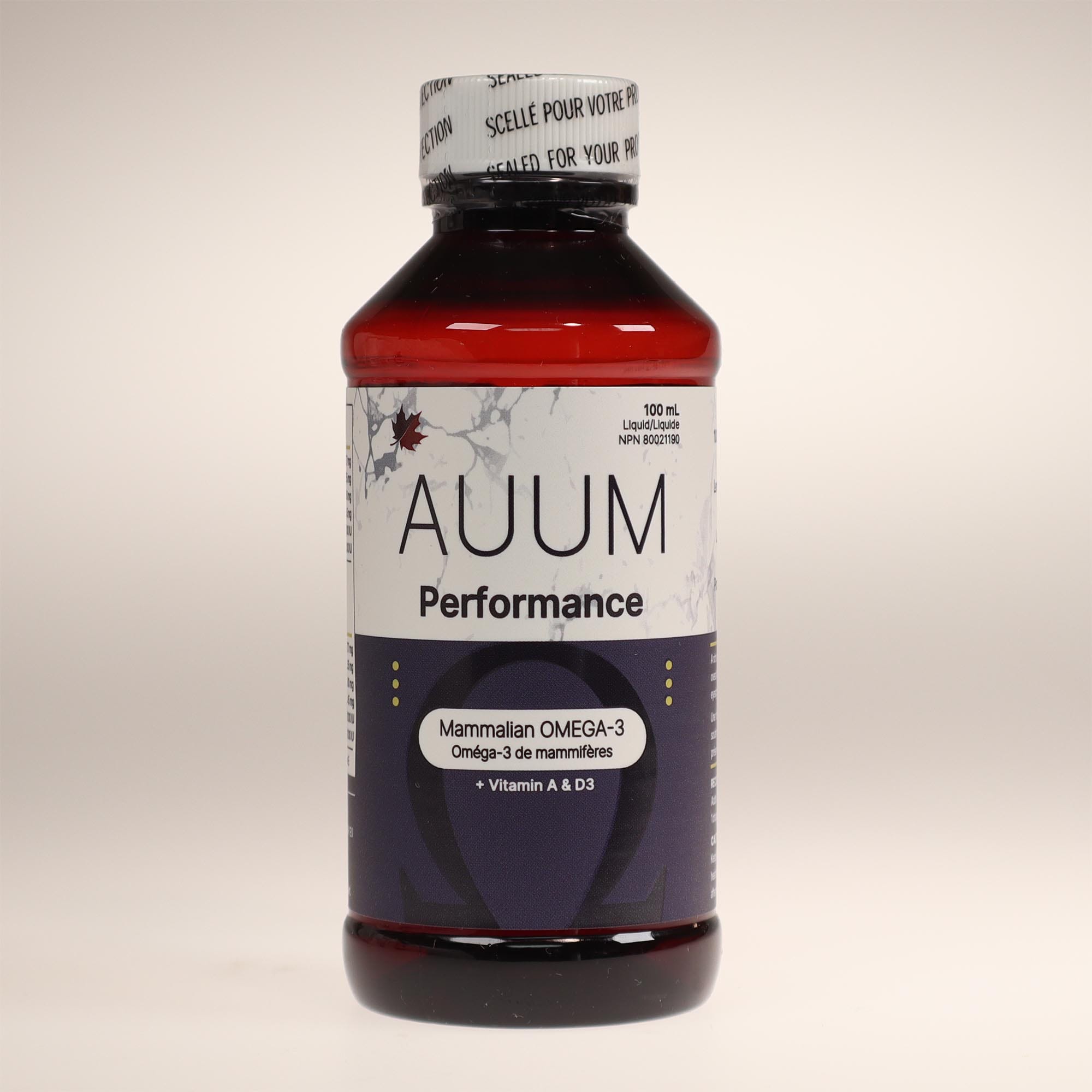
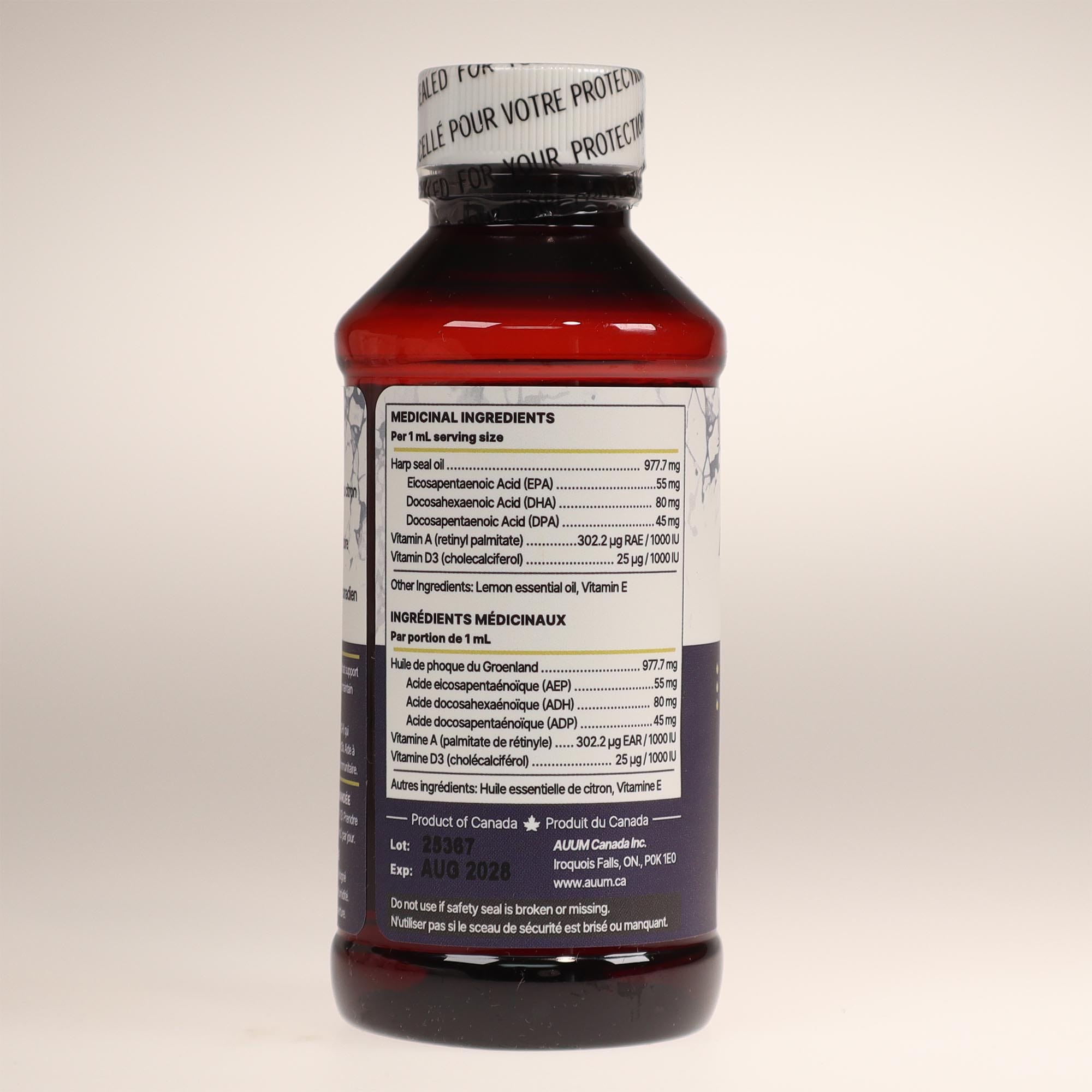
Ingredients per 1 mL drop:
- 977.7 mg Sustainably-sourced wild-caught Harp seal blubber oil (yielding 80 mg EPA, 100 mg DHA, 45 mg DPA)
- 1000 IU Vitamin A
- 1000 IU Vitamin D3
Ingredients per teaspoon (5 mL):
- 4888.5 mg Sustainably-sourced wild-caught Harp seal blubber oil (yielding 400 mg EPA, 500 mg DHA, 225 mg DPA)
- 5000 IU Vitamin A
- 5000 IU Vitamin D3
Non-medicinal ingredients: Lemon oil, Vitamin E (antioxidant to preserve freshness)
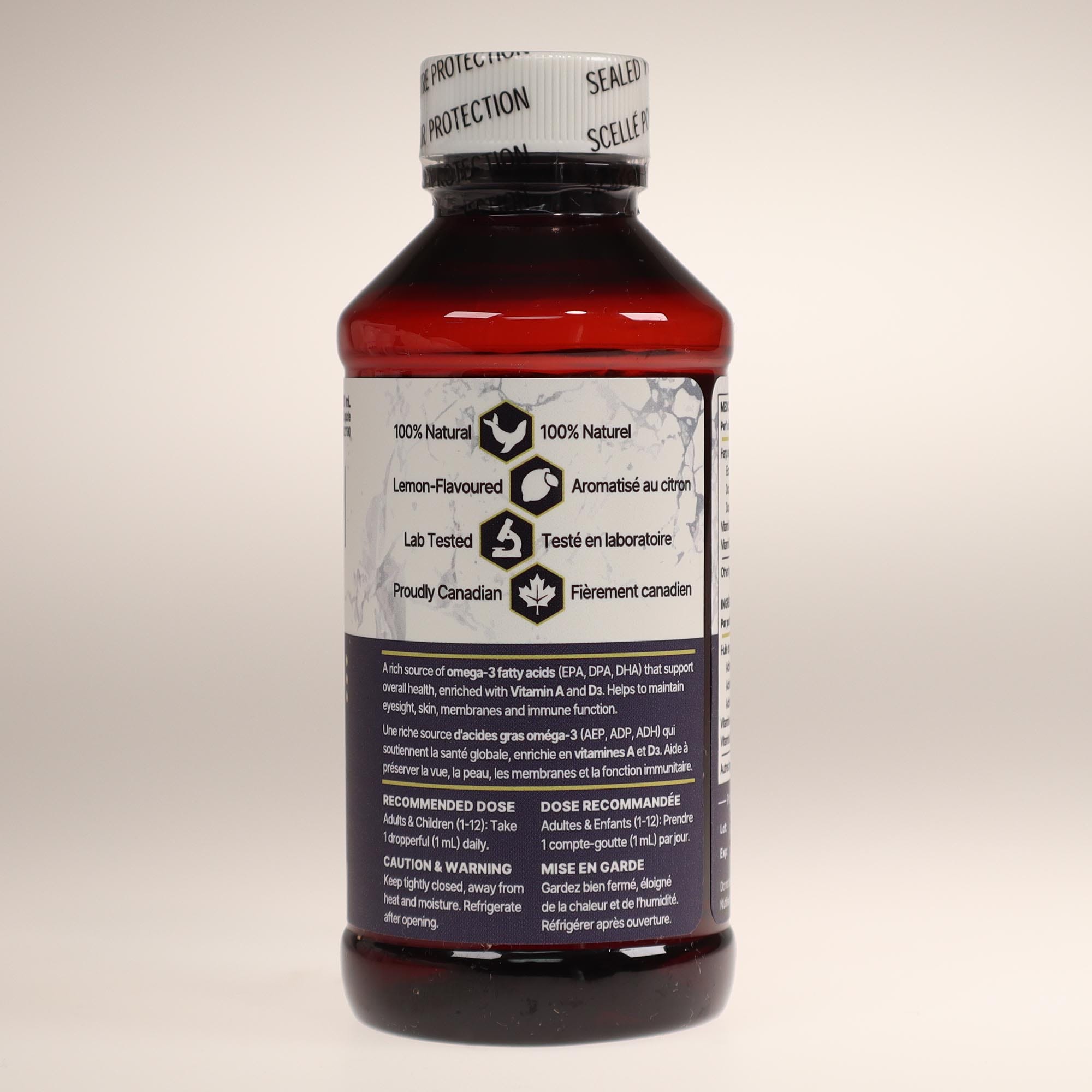
Suggested adult use: take 1 to 5 mL daily under the tongue.
The AUUM Advantage After years of research and clinical studies, AUUM has learned how to create a natural, raw-based oil that is rapidly absorbed under the tongue. Our advances in the field of neuropathy have been recognized by the Canadian Diabetes Association, the Canadian Cancer Society, and the University of Toronto Department of Medicine. But this was just the beginning. Our applied research has allowed us to deliver oil-soluble nutrients, such as Vitamin D3 and Vitamin A, rapidly and with astonishing results. This unique delivery system leverages the natural sublingual transport systems showcased by nutrient absorption during infant breast feeding. This system allows AUUM omega-3 to quickly enter the bloodstream, without first having to pass through the digestive tract. This rapid and direct access to omega-3 fatty acids enriches your senses and improves your performance.
Key benefits to vitamin A in NeuroPerformance:
- Supports eye health and improves night vision
- Improves healthy terrain function
- Improves hair and skin health
- Delays signs of ageing
Vitamin A is extremely important in supporting vision, terrain, and healthy skin. Vitamin A palmitate used in AUUM formulations is an easily absorbed and stored precursor to vitamin A, with higher bioavailability than other carotenoids (a group which includes beta carotene). In fact, 80 percent or more of natural vitamin A from animal sources is absorbed, but only three percent or less of carotenoids from plant foods are absorbed (Maffetone, 2015). Beta carotene from carrots and other vegetable sources must be converted by the small intestines, liver and kidneys into true vitamin A (so all these organs must be functioning healthfully for the process to be successful) and the amount of vitamin A you’re left with is only a fraction of all the beta carotene you’ve consumed. Studies show it takes between 3.6 and 28 parts of beta carotene to get just 1 part of vitamin A (retinol) by weight (Tang, 2010) and if measuring by molecules, it takes 10 to 20 molecules of carotenoids to make one molecule of Vitamin A (Maffetone, 2015). And the efficiency of this conversion rate varies from person to person. The conversion of beta carotene into retinal, and then in turn into retinol (Vitamin A) requires the enzyme β-carotene 15,15′-monooxygenase (BCMO1 or BCO1 gene) (Reboul, 2019). But just as some people don’t properly convert folic acid due to genetic factors, genetic variants in the BCO1 gene cause varying amounts of the enzyme to be produced and cause a large difference in the amount of vitamin A produced from dietary beta carotene (Reboul, 2019). Body Mass Index (BMI) is another factor to consider which affects conversion: there is evidence to suggest that people with more body fat have a lower capability to convert beta carotene to vitamin A (Tang, 2010). Long story short, animal products such as AUUM’s Neuroperformance are a much better source for your daily dose of vitamin A. AUUM NeuroPerformance offers a unique delivery system for vitamin A through sublingual (under-the-tongue) absorption. Vitamin A administered under the tongue is rapidly absorbed through the sublingual mucosa and blood vessels, bypassing the first-pass hepatic (liver) metabolism. This mode of delivery is far superior to conventional supplements, where digestion in the GI tract can break down a large amount of the useable product. Vitamin A can also be used therapeutically: see our page on Can Prev Vitamin A drops for an in depth discussion on Vitamin A and measles, as well as dosing instructions.
Zinc and Vitamin A Zinc status influences several aspects of vitamin A metabolism, including its absorption, transport, and utilization. For retinol to be utilized by the body, it must undergo conversion from retinol to retinal—and this conversion process requires the action of zinc-dependent retinol dehydrogenase enzyme (Christian and West, 1998). Also, zinc is a component of Retinol Binding Protein (RBP) is a protein synthesized in the liver responsible for transporting vitamin A from the liver to other tissues, which depends on sufficient zinc levels (Smith, 1980). So to get the most out of the Vitamin A in Neuroperformance, it’s important to ensure adequate zinc intake such as Doctor’s Choice Zinc picolinate, or Biomed’s Zinc picolinate with copper.
Key benefits to vitamin D3 found in NeuroPerformance:
- Well known to reduce frequency and severity of seasonal detox symptoms by improving terrain health
- Improves bone & dental health
- Improves brain function
- Supports healthy pregnancies
- Addresses inflammation issues
- Reduces risk of fractures & osteoporosis
Vitamin D3, also known as the sunshine vitamin, is an essential vitamin produced by your skin in response to sunlight. It plays an extremely important role in the health of our terrain, the maintenance of bones and teeth, and regulating mood. However, the drastic shift toward indoor work and recreational activities has resulted in most individuals receiving inadequate exposure to sunlight and failing to naturally produce sufficient amounts of vitamin D3 to maintain good health. AUUM products also offer a unique delivery system for vitamin D3 through sublingual (under-the-tongue) absorption. Vitamin D3 administered under the tongue is rapidly absorbed through the sublingual mucosa and blood vessels, bypassing the first-pass hepatic (liver) metabolism. This mode of delivery is far superior to conventional supplements, where digestion in the GI tract can break down a large amount of the useable product. AUUM products (Sublingual D & NeuroPerformance) have been specially formulated to provide you with the optimal amount of vitamin D3 to support your health. Supplementation is particularly important for vulnerable populations at increased risk for vitamin D3 deficiency, such as those in northern areas, or during winter months when daylight is limited. The Vitamin K Connection To provide complete health and balance, oils such as AUUM’s Neuroperformance and any kind of cod liver oil are best taken in concert with other fats and fat soluble nutrients. Vitamin K is the essential cofactor for many vitamin K-dependent proteins that are involved in blood coagulation, bone metabolism, prevention of vessel mineralization, and regulation of various cellular functions (see reference). Vitamin D also plays a role in promoting the production of these vitamin K-dependent proteins (Ballegooijen, 2017). Besides being dependent on vitamin K for its effectiveness, vitamin D works synergistically with it: studies have shown that when vitamin K was combined with vitamin D, there was a significant increase in the total bone mineral density (Kuang et.al, 2020). Vitamin D is famous for its role in calcium metabolism: it helps to absorb calcium from the foods you eat and the supplements you take (Aloia et al, 2014). But it doesn’t direct the calcium into the bones, where we so often need it: that is the role of vitamin K: it directs calcium into the bones (Hauschka, 1986), and prevents it from being deposited in the soft tissues (Theuwissen & Vermeer, 2012) (Schugers et. al, 2012) (such as blood vessels and joints) where it can contribute to cardiovascular problems, kidney stones, and bone spurs). In calcium-deficiency situations, vitamin D will help keep blood calcium levels and pH stable by actually taking it out of the bones and into the blood! So it’s easy to see that taking vitamin D without adequate vitamin K or calcium, could potentially have a negative effect on bone density (Eisman and Boillon, 2013). Therefore, to get the most out of the vitamin D in AUUM’s Neuroperformance, Vitamin K can be taken as a supplement (see Biomed’s MK7 with vitamin D) or can be found in grassfed butter, butter oil, egg yolks, aged cheeses, and duck and goose liver and fat. Without the balance of vitamin K, cod liver oil could lead to heart troubles, bone problems, tooth decay and gum disease.