Product Description
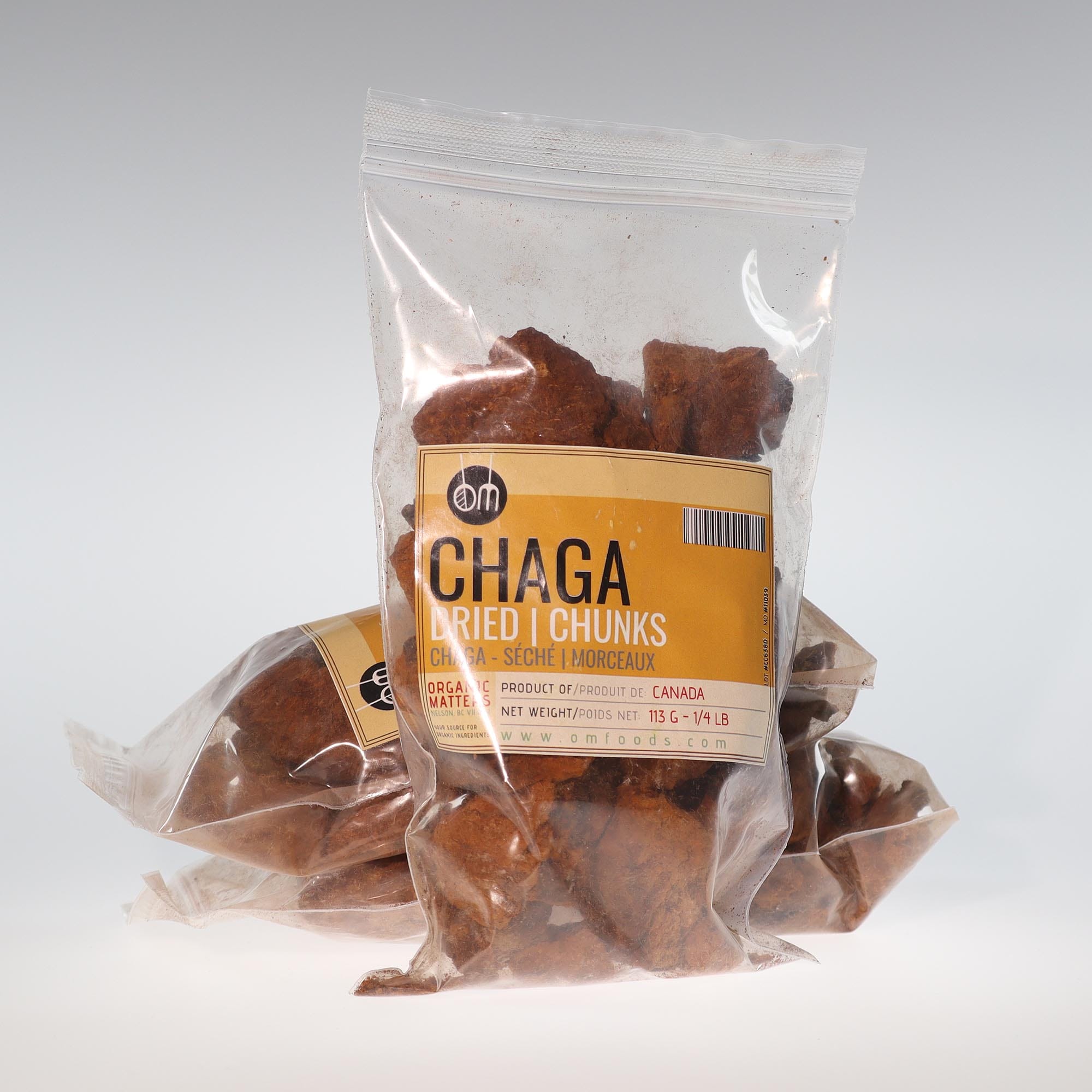
How to prepare: The tea can be prepared by simmering the mushroom in water for one hour or more, a crock pot works great. The pieces can also be reused, until they stop coloring the tea water with the dark brown color. The mild tasting tea can then be consumed on it’s own, or as a base for other teas, coffees and even soups. Production: Our chaga pieces are harvested with sustainable practices in the wild and remote forests of Eastern Canada. This means that care is taken not to damage or puncture the bark of the birch trees which host the fungi, as well as 30% of the chaga is left unharvested, to insure the renewal and growth of the mushroom and continued health of ecosystem that it is a part of. Storage: Store in a cool, dark, dry place in a sealed bag or container
Application of Inonotus obliquus (Chaga) in folk medicine (Szychowski, 2021)
In folk medicine, rational premises are intertwined with elements of magic. The rational premises are based on observation of the natural environment and finding substances that alleviate disease symptoms. In many countries, this is the only way in which people can improve their health due to poverty in society or difficult access to scientific medicine. I. obliquus (Chaga) has been used in folk medicine since ancient times. One of the oldest documents confirming the use of its conks for medicinal purposes is the work by Hippocrates “Corpus Hippocraticum” (Szczepkowski, 2013). The father of medicine used infusions of this mushroom externally to wash wounds.
In Eastern Europe, the Chaga mushroom has been used since the 12th century. Historical sources describe healing of a lip tumor in a Kiev Kniaz. (Perevedentseva, 2013) I. obliquus was used in traditional medicine for many indications by the people of Siberia (Harpe, 1801). The fungus was applied due to its parasite-fighting, tuberculosis-alleviating, anti-inflammatory, and gastrointestinal-supportive properties (Saar, 1991). It was also recommended for heart and liver diseases. Most often, it was used in the form of infusions, inhalations, or aqueous macerates.(Saar, 1991) Also antiseptic soaps containing I. obliquus were prepared for external use. Relatively early attention was paid to the potential I. obliquus antitumor or supportive effect in cancer treatment, which was particularly important before the era of scientific oncology. Such descriptions can be found in popular literature, e.g. in Aleksander Solzhenitsyn’s Cancer Ward (Solzhenitsyn, 2017).
In Asia (China, Japan, Korea), Russia, and the Baltic countries, extracts of Chaga mushroom were used due to their beneficial effects on the plasma lipid system and heart function as well as antibacterial, anti-inflammatory, and cancer-healing activity (Shashkina, 2006). Furthermore, the antioxidant activity of I. obliquus may be important for prevention of free radical-related civilization diseases (atherosclerosis, cancer, diabetes, accelerated aging, and degenerative diseases of the central nervous system) (Park, 2005).
Disclaimer: This information is for educational purposes only and has not been evaluated by the CFIA or FDA. It is not intended to diagnose, treat, cure, or prevent any disease. This product has been packaged in the same facility as peanuts, tree nuts, wheat, soy, and other potential allergens.
Reviews
There are no reviews yet.