
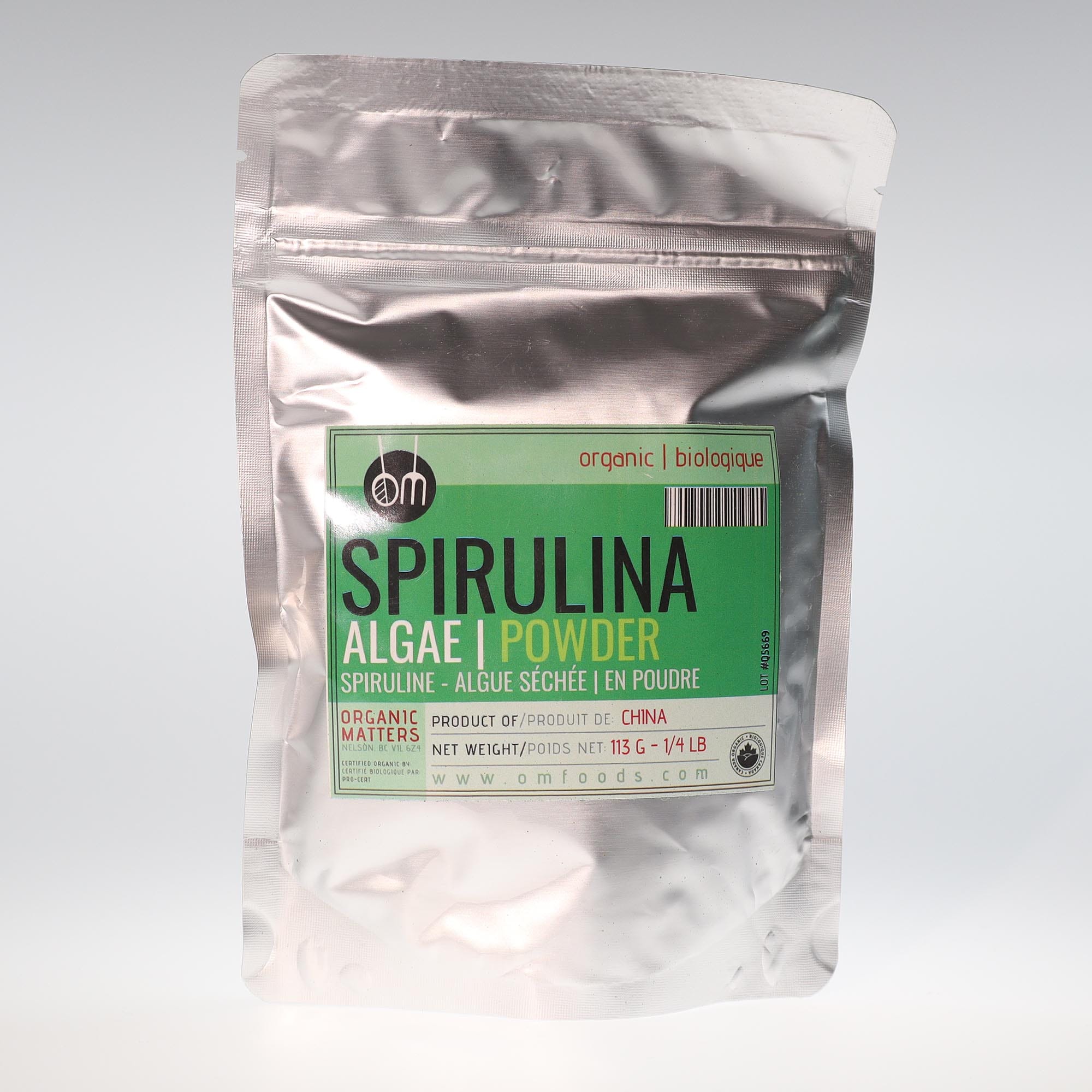
About Organic Spirulina Powder
Organic Spirulina Powder 113g is a finely powdered blue-green microalgae food made from Arthrospira platensis and Arthrospira maxima.
Spirulina has been consumed as a food for centuries and is valued for its concentrated natural composition, which includes plant protein, amino acids, colourful pigments and various vitamins and minerals.
Its distinctive deep green colour and earthy flavour make it a recognizable ingredient in smoothies, juices and other plant-based recipes.
The naturally occurring blue pigment phycocyanin has also attracted considerable scientific interest for its antioxidant properties and biochemical activity.
What Is Spirulina?
Despite being commonly described as a microalga, spirulina is technically a type of cyanobacterium.
Commercially cultivated spirulina typically belongs to the genus Arthrospira, which includes the species Arthrospira platensis and Arthrospira maxima.
These microscopic organisms grow in alkaline aquatic environments and use photosynthesis to produce organic compounds from sunlight, water and carbon dioxide.
After harvesting, spirulina is washed, dried and processed into a convenient powder.
The nutrient composition of the finished material can vary according to the species, cultivation environment, harvesting and drying methods.
Spirulina as a Source of Plant Protein
Spirulina is naturally rich in protein and is frequently discussed as a nutrient-dense plant-based food.
Published nutritional analyses commonly report that dried spirulina contains approximately 55–70% protein by dry weight, although the exact percentage varies with production conditions.
Its proteins supply both essential and non-essential amino acids.
This makes spirulina an interesting complementary ingredient for vegetarian and plant-focused diets.
However, the actual amount of protein supplied depends on the serving size. A small quantity added to a smoothie contributes less protein than a conventional full serving of protein-rich food.
Spirulina is best regarded as one component of a varied diet rather than a complete replacement for other nutritional sources.
Phycocyanin: Spirulina’s Distinctive Blue Pigment
Phycocyanin is a naturally occurring blue pigment-protein complex associated with the photosynthetic machinery of spirulina.
Together with chlorophyll and carotenoids, it contributes to spirulina’s characteristic green-blue appearance.
Phycocyanin and its related compounds have been investigated for antioxidant activity and interactions with cellular signalling pathways.
Much of the detailed mechanistic research involves laboratory systems, animal experiments or purified extracts rather than ordinary culinary servings of whole spirulina powder.
These findings provide useful background on spirulina’s biochemical composition but should not be interpreted as evidence that consuming this powder treats inflammatory diseases or prevents cellular damage in humans.
Spirulina and Cardiovascular Research
Researchers have investigated spirulina supplementation in relation to blood pressure, cholesterol, triglycerides and other measurable cardiovascular risk factors.
A 2025 systematic review and meta-analysis examined randomized controlled trials involving spirulina and chlorella.
The researchers reported a modest reduction in diastolic blood pressure associated with spirulina supplementation, but did not identify a statistically significant overall improvement in blood lipid measurements.
The authors emphasized that the clinical significance of the findings remained uncertain and that additional research was needed.
These findings relate to spirulina supplementation in controlled research settings. They do not establish that this particular food powder treats high blood pressure, reverses cardiovascular disease or replaces prescribed treatment.
Research Reference
The Role of Chlorella and Spirulina as Adjuvants of Cardiovascular Risk Factor Control: A Systematic Review and Meta-Analysis of Randomised Controlled Trials (2025).
https://pubmed.ncbi.nlm.nih.gov/40289965/
Spirulina and Blood Pressure Studies
In another systematic review, Shiri and colleagues examined randomized clinical trials investigating spirulina supplementation and blood pressure.
Their analysis, published in 2025, reported average reductions in systolic and diastolic blood pressure across the included studies.
However, results varied across populations, doses and treatment durations, and the investigators called for further high-quality trials.
This research is valuable for understanding the scientific interest in spirulina but does not establish a specific cardiovascular benefit from ordinary culinary quantities of this finished powder.
Research Reference
Shiri et al. (2025) – The Effect of Spirulina Supplementation on Blood Pressure in Adults: A GRADE-Assessed Systematic Review and Meta-Analysis of Randomized Clinical Trials.
https://pubmed.ncbi.nlm.nih.gov/39529406/
Spirulina and Metabolic Research
Spirulina has also been studied in randomized trials involving blood glucose measurements, insulin-related markers, lipid profiles and body composition.
A 2025 systematic review and meta-analysis examined 35 randomized trials and reported improvements in several measured metabolic and cardiovascular markers.
The findings are encouraging, although certainty differed between outcomes and the trials varied in their formulations, doses and participant characteristics.
These results do not establish that this product treats diabetes, produces reliable weight loss or corrects metabolic disorders.
Research Reference
Spirulina’s impacts on cardiovascular health: Insights from a systematic meta-analysis of randomized controlled trials (2025).
https://pubmed.ncbi.nlm.nih.gov/40953712/
Spirulina and Environmental Contaminant Research
Because spirulina grows in aquatic environments, its quality depends partly on the conditions under which it is cultivated and processed.
Researchers and food-safety authorities have investigated the possibility of contamination with certain cyanobacterial toxins, bacteria and heavy metals.
This is particularly relevant to the sourcing and quality assessment of commercial spirulina products.
In 2026, research published in the Journal of Applied Phycology examined heavy-metal exposure considerations associated with commercial spirulina.
These investigations reinforce the importance of responsible cultivation, testing and quality assurance.
They do not establish that eating spirulina removes accumulated metals from the human body.
Research Reference
Is Spirulina Safe in Terms of Heavy Metals? A Public Health Risk Assessment (2026).
https://link.springer.com/article/10.1007/s10811-026-03901-0
Spirulina and Vitamin B12
Spirulina is sometimes promoted as a natural source of vitamin B12.
However, spirulina contains substantial amounts of B12-like compounds, including analogues that are not considered reliable sources of biologically active vitamin B12 for humans.
For this reason, spirulina should not be relied upon as the sole source of vitamin B12, particularly by individuals following vegan diets.
A properly formulated B12 supplement or appropriately fortified foods may be necessary to ensure adequate intake.
This distinction is important when evaluating spirulina’s otherwise varied nutritional composition.
Using Spirulina in the Kitchen
Spirulina’s strong colour and characteristic earthy, slightly marine flavour make it particularly suitable for blending with other ingredients.
It can be incorporated into fruit or vegetable smoothies, fresh juices and blended drinks.
Small amounts can also be added to suitable food recipes when a green colour and distinctive flavour are desired.
For a milder taste, spirulina can be combined with ingredients such as banana, pineapple, berries or citrus fruit.
Start with a small quantity when first incorporating it into your diet, particularly if you are unfamiliar with its flavour.
Related Products and Education
For another single-ingredient microalgae food, explore Organic Chlorella Powder 113g (Cracked Cell):
https://yumnaturals.store/product/organic-chlorella-powder-113g-cracked-cell/
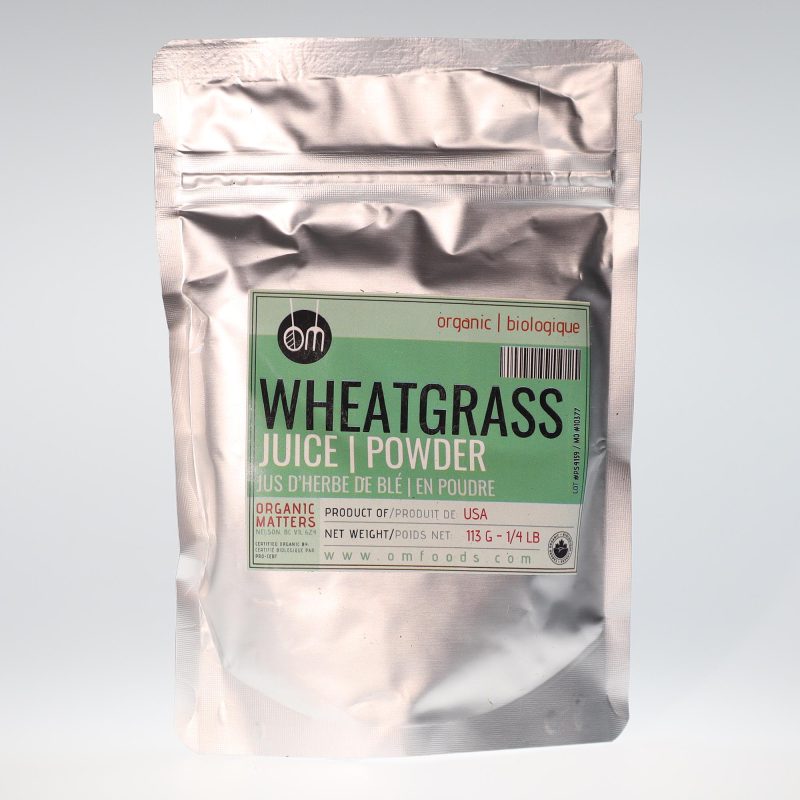
For a different plant-derived green powder, explore Wheatgrass Juice Powder:
https://yumnaturals.store/product/organic-wheatgrass-juice-powder-113-grams/
Organic Spirulina Powder is also included in the 30 Days to Better Health Product Bundle:
https://yumnaturals.store/product/30-days-to-better-health-bundle/
Product Details
Product Form: Fine powder.
Net Contents: 113 g (4 oz).
Botanical Identification: Arthrospira platensis and Arthrospira maxima.
Organic Certification: To be confirmed against current supplier documentation.
Storage: Keep tightly sealed in a cool, dry place away from moisture and direct sunlight.
Safety & Important Information
Use only spirulina intended for human consumption and obtained from suppliers with appropriate quality testing.
Spirulina products may be contaminated with cyanobacterial toxins or heavy metals if cultivation and processing are not adequately controlled.
Consult a healthcare practitioner before use if pregnant or breastfeeding, if you have phenylketonuria, or if you have a significant medical condition or take medications that may affect blood clotting or blood pressure.
Discontinue use if an allergic reaction or persistent digestive discomfort occurs.
Spirulina should not be relied upon as a source of biologically active vitamin B12.
Do not use this product as a substitute for prescribed medication or treatment.
Keep out of reach of children.
Ingredient: Organic spirulina powder (Arthrospira platensis and Arthrospira maxima).
Ina M. –
I use this in my smoothie, it has lots of nutrients, instead of taking my supplements, I use spirulina for diversification, as taking the same supplements for more then 2.5 years gets too much for my stomach. One full tea spoon in 500g of smoothie, great breakfast