
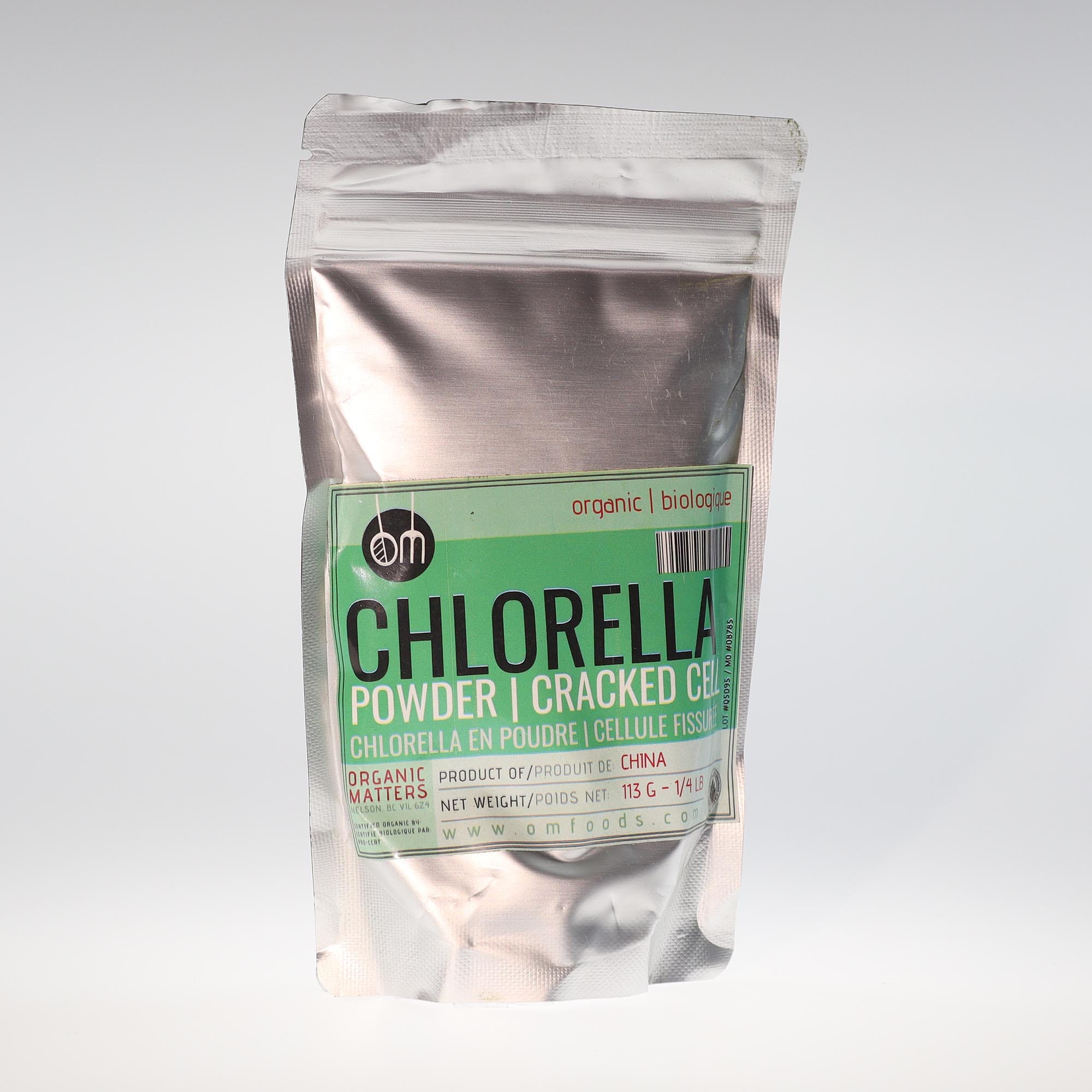
Organic Chlorella Powder 113g (Cracked Cell) – Concentrated Green Nutrition
Chlorella is a single-celled freshwater green algae valued for its naturally occurring protein, chlorophyll and diverse nutritional constituents. Its characteristic deep-green colour reflects the abundance of photosynthetic pigments within its cells. Our Organic Chlorella Powder 113g (Cracked Cell) is supplied in powdered form for convenient incorporation into smoothies, juices and other everyday food preparations.
Why Cracked-Cell Chlorella?
Chlorella possesses a comparatively tough outer cell wall that can limit access to its internal contents during digestion. Cracked-cell or broken-cell processing mechanically disrupts this structure, making the algae’s cellular contents more accessible. This processing distinguishes cracked-cell chlorella powder from untreated whole-cell material. The product is described by our supplier as having undergone a gentle milling process designed to break the cell walls while limiting exposure to heat and light.
Chlorella and Research into Environmental Contaminants
Chlorella has attracted scientific interest for its ability to interact with certain heavy metals and pesticides. Research has investigated several possible mechanisms, including the binding properties of chlorophyll-associated compounds and cellular processes involving glutathione, an antioxidant involved in responses to oxidative stress.
Laboratory and environmental studies (see below) have demonstrated that certain Chlorella species can bind, accumulate or help break down specific contaminants under controlled conditions. These findings have contributed to research into the potential use of microalgae in environmental remediation.
Further Research
1. Handbook of Marine Microalgae (2015) – Microalgae and Nutraceutical Benefits
https://www.sciencedirect.com/science/article/pii/B9780128007761000169
Contains the original discussion of chlorophyll, porphyrin structures and glutathione-related mechanisms.
2. Performance of Chlorella vulgaris Exposed to Heavy Metal Mixtures (2021)
https://pmc.ncbi.nlm.nih.gov/articles/PMC7908404/
Examines the interaction between Chlorella vulgaris and heavy metals, including cellular responses to metal exposure.
3. Potential Degradation Efficiency of Chlorella vulgaris Towards Methamidophos and Diazinon (2024)
https://www.sciencedirect.com/science/article/abs/pii/S2211926424001784
Investigates the ability of Chlorella vulgaris to degrade particular pesticide compounds in experimental conditions.
4. The Metabolism and Potential Bioactivity of Chlorophyll and Metallo-chlorophyll Derivatives in the Gastrointestinal Tract (2021)
https://onlinelibrary.wiley.com/doi/full/10.1002/mnfr.202000761
Reviews chlorophyll-related compounds, their interactions with certain toxins and their behaviour during digestion. This is particularly relevant to the proposed chlorophyll-binding mechanism.
Naturally Occurring Protein and Amino Acids
Chlorella contains a substantial proportion of protein by dry weight, although the exact percentage varies according to species, cultivation conditions and processing. Its proteins contain essential amino acids, including leucine, lysine, valine and others that contribute to the nutritional profile of algae. Chlorella has therefore attracted interest as a concentrated plant-based protein source and as an ingredient in foods and nutritional formulations. As with other plant-based proteins, the balance of individual amino acids varies, and chlorella is best understood as one component of a varied diet.
Chlorophyll and Other Plant Pigments
Chlorella naturally contains chlorophyll-a and chlorophyll-b, the pigments responsible for capturing light during photosynthesis. It also contains carotenoid pigments such as lutein and beta-carotene. These naturally occurring compounds have been investigated for their antioxidant properties and biological roles. Chlorella itself has also been studied as a source of antioxidants. The presence of these compounds does not establish that this particular powder prevents or treats eye disease, cardiovascular conditions or other medical disorders.
Vitamins, Minerals and Other Nutritional Constituents
Depending on its growing conditions and composition, chlorella may provide nutrients such as iron, folate, vitamin K and other vitamins and minerals. Chlorella also contains naturally occurring fatty acids and nucleic acids, as do many other cellular food sources. Individual nutrient concentrations can vary significantly between products and batches. For this reason, specific vitamin, mineral or protein quantities should be taken from the verified nutrition information for the actual product.
Cultivation and Sourcing
According to the current YumNaturals sourcing description, this chlorella is cultivated in the Ordos Desert region of Inner Mongolia, China, using natural sunlight and mineralized water in enclosed outdoor growing pools. The supplier describes routine testing for heavy metals and reviews its organic agricultural specifications.
Important Information
Consult a qualified healthcare practitioner before using chlorella if pregnant or breastfeeding, or if taking medications.
Chlorella may contain vitamin K, which can interact with blood-thinning medications such as warfarin. Some individuals experience gastrointestinal changes, including loose stools, when introducing chlorella. Start with a smaller amount to assess tolerance. Discontinue use if an allergic or hypersensitivity reaction occurs.
This product is packaged in a facility that also handles peanuts, tree nuts, wheat, soy and other potential allergens.


Reviews
There are no reviews yet.