
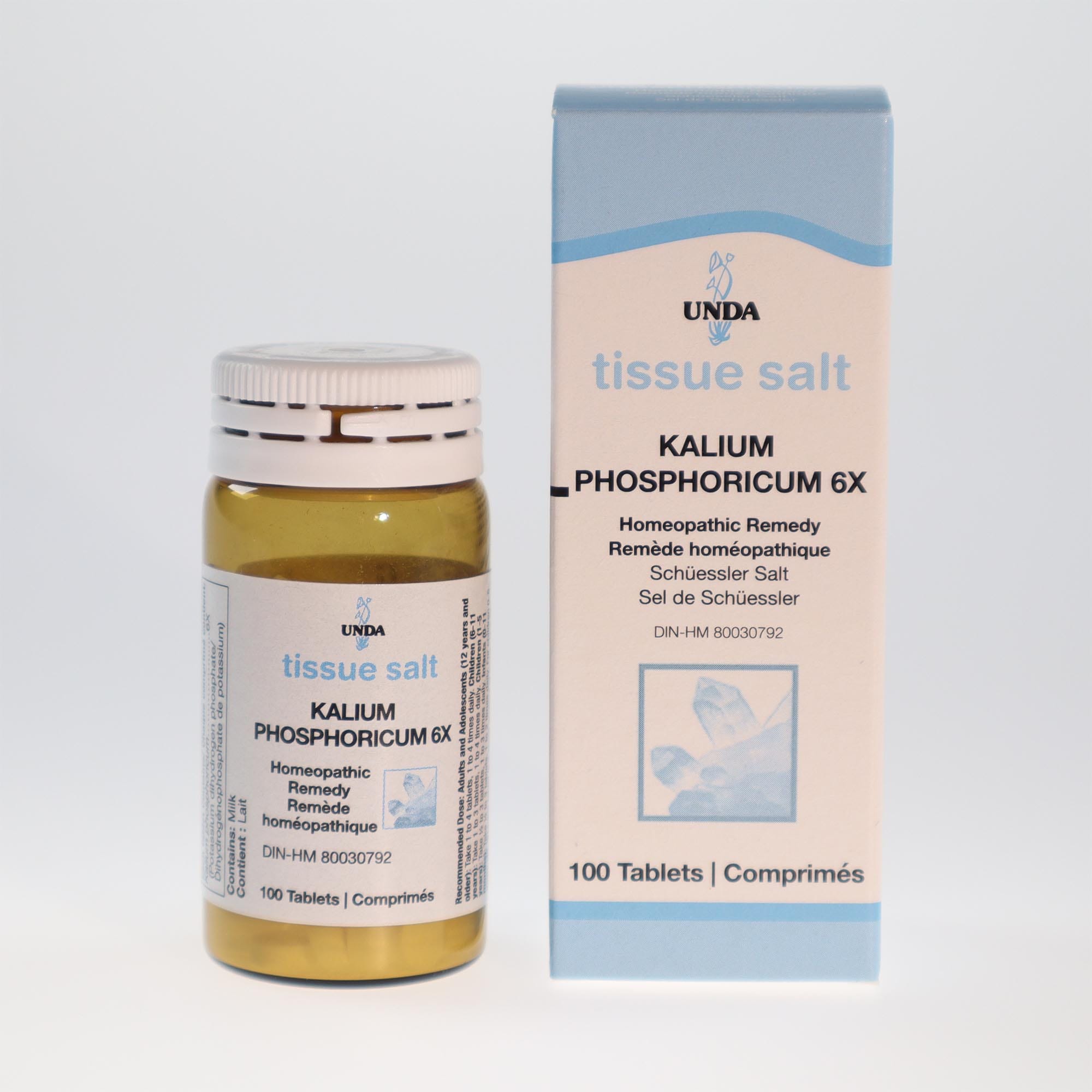


About Kali Phosphoricum 6X
Kali Phosphoricum 6X is a traditional homeopathic tissue-salt preparation made from potassium phosphate. It belongs to the original twelve Schüßler Tissue Salts, a family of low-potency homeopathic mineral preparations based on the biochemical system developed by Dr. Wilhelm Heinrich Schüßler in the nineteenth century.
Kali phosphoricum, also known as Kalium phosphoricum or Kali phos, has a long history of use in classical homeopathy and the Schüßler biochemical system, particularly in relation to the nervous system, mental fatigue, nervous tension and constitutional patterns associated with physical or intellectual overexertion.
Traditional homeopathic product labeling also describes Kali phosphoricum in relation to temporary relief of occasional nervous tension, mental fatigue and headaches associated with tiredness.
These applications reflect historical homeopathic practice rather than established clinical evidence.
Traditional Homeopathic Perspective
Kali phosphoricum is a homeopathic preparation traditionally derived from potassium phosphate, a mineral compound containing potassium and phosphate ions.
In classical homeopathic literature, Kali phosphoricum has a broad constitutional profile involving mental fatigue, nervous tension, irritability, difficulty concentrating and feelings of exhaustion following prolonged physical or intellectual effort.
Historical homeopathic descriptions frequently associate this preparation with periods of mental overwork, reduced enthusiasm, nervous sensitivity, restlessness and fatigue accompanied by difficulty settling or concentrating.
Traditional references also discuss Kali phosphoricum in relation to occasional sleeplessness, stress-related headaches and sensations of nervous or muscular weakness.
Classical homeopathic symptom descriptions sometimes distinguish between physical tiredness following exertion and mental fatigue following extended periods of concentration, study or emotional strain. Kali phosphoricum is traditionally discussed in relation to both patterns.
Within the Schüßler biochemical system, Kali phosphoricum is recognized as Tissue Salt No. 5 and is historically associated with the nerves, mental vitality and the body’s response to nervous exhaustion.
These descriptions reflect the historical homeopathic and biochemical profiles associated with Kali phosphoricum. They do not establish that the preparation treats anxiety disorders, depression, insomnia, neurological conditions or chronic fatigue, or that it improves cognitive performance through a demonstrated physiological mechanism.
A Primer on Tissue Salts
What Are Tissue Salts?
Tissue salts, also known as cell salts, biochemical salts, or Schüßler salts, are low-potency homeopathic preparations made from mineral substances.
The system was developed during the nineteenth century by German physician Dr. Wilhelm Heinrich Schüßler (1821–1898), who proposed that certain inorganic mineral compounds were important to the normal functioning of human tissues.
Schüßler’s original system identified twelve principal tissue salts, each associated with particular minerals and traditional applications. Later practitioners expanded the system to include additional salts.
The names of these preparations generally reflect the mineral substances from which they are made. Examples include Calcarea phosphorica (calcium phosphate), Ferrum phosphoricum (iron phosphate), Natrum muriaticum (sodium chloride), and Magnesia phosphorica (magnesium phosphate).
The Biochemical System of Dr. Schüßler
Schüßler developed his biochemical approach from nineteenth-century observations concerning mineral constituents found in human tissues.
He believed that disturbances in the distribution or utilization of certain mineral salts could be associated with characteristic patterns of symptoms. His therapeutic system used specially prepared mineral substances selected according to these traditional associations.
Within this framework, individual tissue salts were historically connected with different aspects of tissue structure and function, including bones, connective tissues, muscles, nerves, and the body’s fluid-regulation processes.
These ideas are part of the historical framework of biochemic medicine. Modern physiology recognizes the importance of minerals in normal cellular function, but this does not establish Schüßler’s proposed mechanisms or demonstrate that homeopathic tissue salts correct cellular mineral imbalances.
How Are Tissue Salts Prepared?
Tissue salts are prepared using homeopathic methods, typically through successive dilution and trituration or other processing procedures specified in homeopathic pharmacopoeias.
Traditional Schüßler tissue salts are prepared according to principles of the biochemical system, with manufacturing procedures and excipients varying according to the producer and the applicable homeopathic pharmacopoeia.
Most preparations in the traditional tissue-salt range are supplied in decimal potencies, commonly 6X or 12X, depending on the individual mineral and manufacturer.
The letter X indicates a decimal potency. Each successive dilution stage represents one part of the preceding preparation combined with nine parts of a suitable diluent or carrier, followed by the prescribed homeopathic preparation process.
For example, a 6X preparation has undergone six successive 1:10 dilution stages. This corresponds to a nominal dilution factor of one part in one million relative to the starting preparation.
Because tissue salts are homeopathic preparations, they should not be confused with conventional nutritional mineral supplements. Their mineral content and intended use are different from those of products formulated to supply measurable dietary quantities of calcium, magnesium, potassium, or other essential minerals.
Tissue Salts in Traditional Homeopathic Practice
Within the Schüßler system, tissue salts are selected according to their traditional mineral associations and the individual’s overall pattern of symptoms.
Some are historically connected with muscular comfort, others with digestive patterns, skin and connective tissues, or nervous-system complaints.
Individual preparations contain a single mineral-derived homeopathic ingredient, while combination products bring together several tissue salts.
Individual tissue salts provide a way to explore the traditional system one preparation at a time.
Although tissue salts have a long history of homeopathic use, high-quality clinical evidence has not established that they reliably correct mineral deficiencies, restore cellular mineral balance, or treat medical conditions.
About Kali Phosphoricum in the Tissue-Salt Tradition
Kali phosphoricum is designated Tissue Salt No. 5 in the traditional Schüßler system.
It is historically associated with mental and nervous fatigue, occasional nervous tension, irritability, and constitutional patterns involving physical or intellectual overexertion.
In classical biochemic literature, Kali phosphoricum is sometimes described as a nerve salt or nerve nutrient. These expressions reflect the traditional framework of the Schüßler system and do not mean that homeopathic tablets provide nutritionally significant quantities of potassium or phosphate.
Traditional accounts also connect Kali phosphoricum with headaches arising during periods of mental effort, unsettled sleep associated with stress, and feelings of nervous exhaustion.
These historical associations do not establish that the preparation restores neurotransmitter activity, improves memory, reduces cortisol or treats psychiatric or neurological conditions.
Potassium Phosphate and Nervous-System Function: Understanding the Difference
Potassium phosphate refers to a family of inorganic compounds containing potassium and phosphate ions. Different forms exist, including monobasic and dibasic potassium phosphate.
Potassium is an essential mineral and the principal positively charged ion within most body cells. It is involved in maintaining electrical gradients across cell membranes, transmitting nerve impulses and supporting normal muscle contraction.
The movement of potassium and other ions across nerve-cell membranes contributes to the electrical signals that allow communication throughout the nervous system.
Phosphate is also essential to human physiology. It forms part of adenosine triphosphate (ATP), a molecule involved in cellular energy transfer, and contributes to the structure of cell membranes, nucleic acids, bones and teeth.
In nerve cells, normal energy metabolism and the maintenance of electrical gradients are important for transmitting and regulating signals.
These established physiological roles relate to potassium and phosphate present in biologically meaningful quantities. They should not be interpreted as evidence that Kali Phosphoricum 6X replenishes nervous-system minerals, improves neuronal signalling, increases ATP production, treats chronic stress or enhances cognitive performance.
A homeopathic potassium phosphate preparation is not equivalent to a conventional potassium or phosphate supplement, and it should not be used to correct diagnosed nutritional or electrolyte deficiencies.
Ingredients & Product Composition
Medicinal Ingredient: Kali phosphoricum (Kalium phosphoricum; potassium phosphate) 6X.
Non-Medicinal Ingredients: Lactose monohydrate (milk), xylitol, sodium carboxymethylcellulose, and magnesium stearate.
Product Details
Product Family: Schüßler Tissue Salts
Potency: 6X (decimal homeopathic potency)
Product Form: Homeopathic tablets
Package Quantity: Refer to the currently supplied product package.
Storage: Store according to the instructions on the product label, generally in a cool, dry place away from moisture.
Safety & Important Information
Kali Phosphoricum 6X is a homeopathic preparation traditionally used within the Schüßler biochemical system. It is not a substitute for medically established treatment of anxiety disorders, depression, persistent insomnia, neurological conditions or other significant medical conditions.
Do not use if you have had an allergic reaction to the product or any of its ingredients. Check the current product label for lactose and other potential allergens.
Consult a healthcare practitioner before use if pregnant or breastfeeding. If symptoms persist or worsen, consult a healthcare practitioner.
Persistent or worsening exhaustion, severe or unusual headaches, significant changes in mood, or ongoing sleep disturbances should receive appropriate medical assessment.
Keep out of reach of children. Do not use if the safety seal is missing or broken.
Homeopathic uses are based on traditional practice and do not establish clinical effectiveness for treating medical conditions.
The documented historical product uses include occasional anxiety, overexertion and mental fatigue; other current 6X product labels describe nervous tension, irritability and tension headaches.







Reviews
There are no reviews yet.