
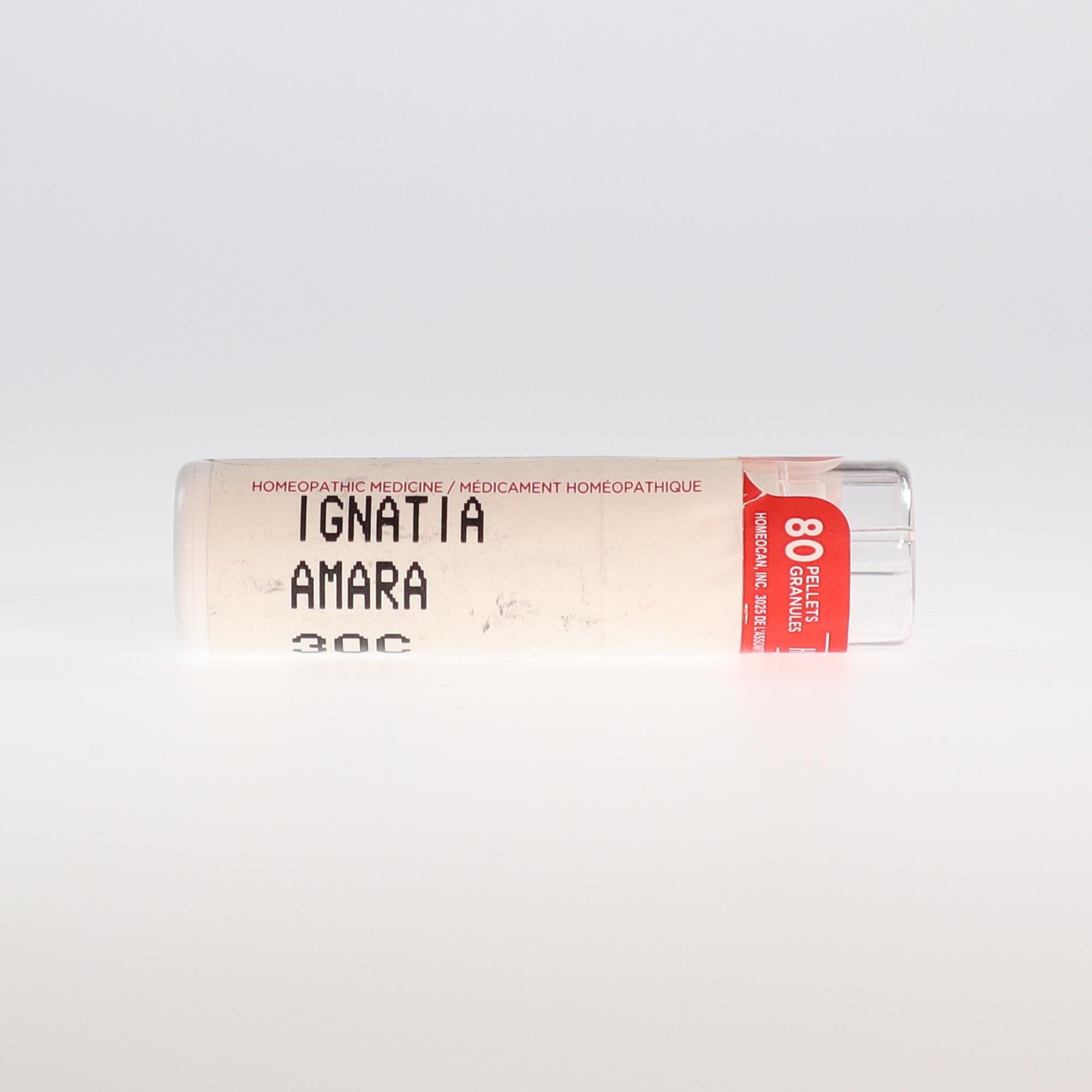
Ignatia Amara 30CH – Traditional Homeopathic Remedy
Ignatia Amara 30CH is a single-remedy homeopathic preparation made from Strychnos ignatii, a plant commonly known as St. Ignatius bean. It is presented in the traditional homeopathic granule format and prepared to a 30CH potency.
Ignatia amara has a long history of use within classical homeopathy, where remedies are traditionally selected according to an individual’s overall pattern of emotional, mental and physical characteristics.
Traditional Homeopathic Profile of Ignatia Amara
In traditional homeopathic materia medica, Ignatia amara is particularly associated with emotional sensitivity and reactions to grief, disappointment or sudden emotional distress. Classical descriptions commonly discuss changing moods, heightened sensitivity to external stimuli, nervous tension, restlessness and contradictory emotional responses. These characteristics form part of the traditional homeopathic profile of Ignatia amara and are used by homeopathic practitioners when considering individualized remedy selection. Such traditional descriptions should not be interpreted as established clinical evidence that this product treats emotional distress, anxiety, depression or other medical conditions.
Understanding the 30CH Potency
The designation 30CH refers to the Hahnemannian centesimal dilution scale used in homeopathy. In this system, each dilution stage involves combining one part of the preceding preparation with 99 parts of diluent, followed by a process known as succussion, or vigorous shaking. A preparation labelled 30CH has undergone 30 successive centesimal dilution stages. This method is a defining feature of traditional homeopathic manufacturing. The 30CH designation indicates the preparation method and dilution level rather than a conventional milligram dosage of the starting botanical substance.
How Homeopathic Granules Are Prepared
Homeopathic granules are typically small, dissolvable pellets made from a carrier material such as sucrose and lactose. The homeopathic preparation is applied during manufacturing according to the manufacturer’s established process. The resulting granules are commonly packaged in small dispensing tubes designed to release a measured number of pellets without requiring direct handling.
A Note on Homeopathy
Homeopathy is a system of complementary medicine developed in the late eighteenth century by Samuel Hahnemann. Two central principles of traditional homeopathic practice are the principle of similarity, commonly expressed as “like cures like,” and the use of serially diluted preparations. Practitioners traditionally select remedies by comparing a person’s reported characteristics and symptoms with descriptions found in homeopathic materia medica.

Reviews
There are no reviews yet.