
About Zinc Picolinate
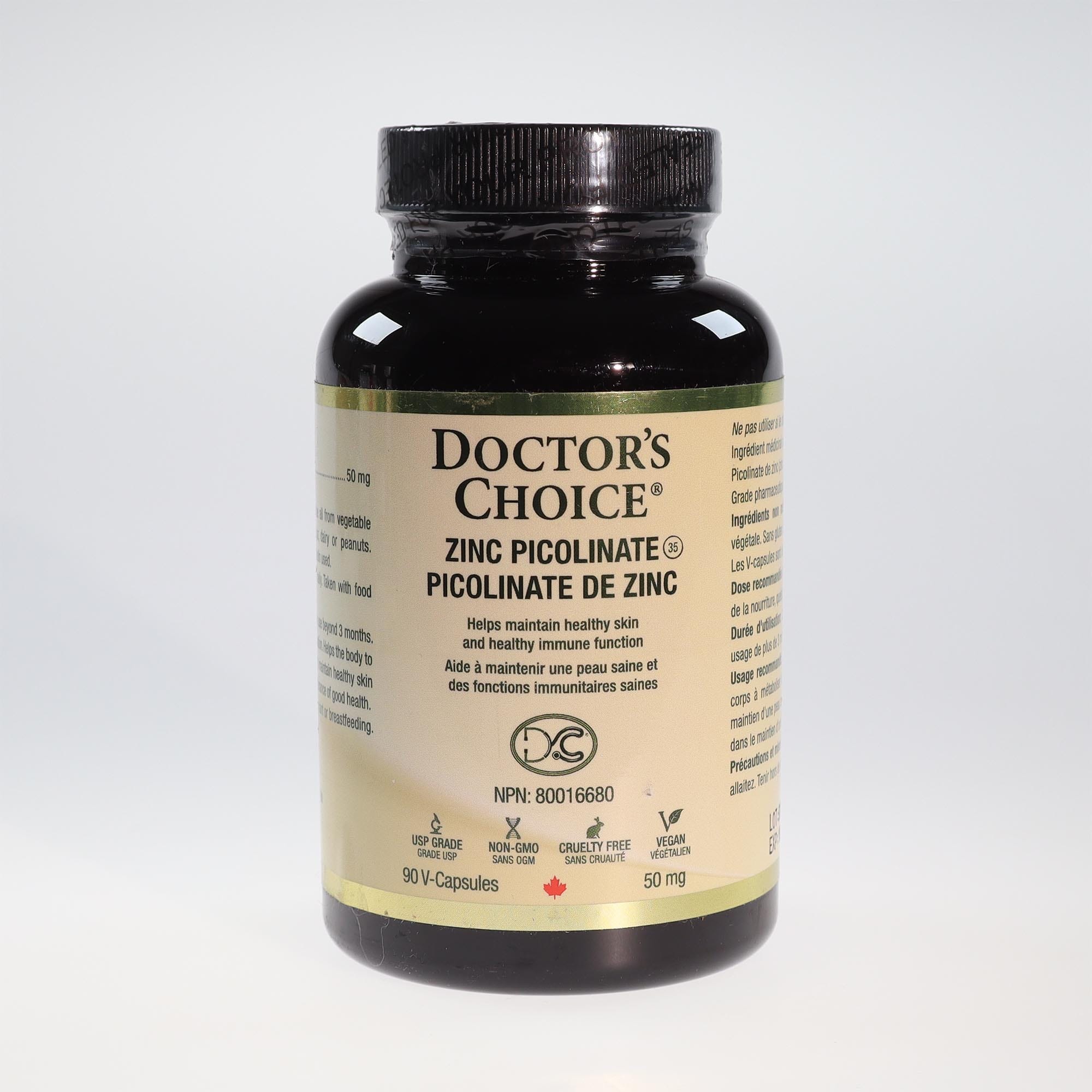
Doctor’s Choice Zinc Picolinate is a single-mineral supplement providing 10 mg of elemental zinc from 50 mg of zinc picolinate per vegetable capsule.
Zinc is an essential trace mineral involved in hundreds of enzyme reactions throughout the body. It contributes to normal protein and DNA synthesis, cellular growth, connective tissue formation and the metabolism of carbohydrates, fats and proteins.
This formula supplies zinc combined with picolinic acid, a naturally occurring compound produced through tryptophan metabolism.
The vegetable capsules provide a convenient source of supplemental zinc for adults seeking to maintain adequate mineral intake.
Health Canada-Authorized Uses: Helps in connective tissue formation, helps the body metabolize carbohydrates, fats and proteins, and helps maintain healthy skin.
Canadian Natural Product Number: NPN 80016680.
What Is Zinc Picolinate?
Zinc picolinate is a compound formed from zinc and picolinic acid.
Picolinic acid occurs naturally in the body as a product of tryptophan metabolism.
When used in a mineral supplement, the picolinate component serves as a ligand associated with zinc.
Different supplemental zinc compounds include zinc gluconate, zinc citrate, zinc sulfate and zinc picolinate.
They differ in their chemical structures, elemental zinc concentrations and certain physical characteristics.
The nutritional amount of zinc supplied by a supplement should always be expressed as elemental zinc, rather than the total weight of the mineral compound.
In this formula, 50 mg of zinc picolinate provides 10 mg of elemental zinc.
Zinc Picolinate and Mineral Absorption
Not all forms of supplemental zinc have been studied to the same extent, and their absorption may vary according to the formulation, dosage, diet and individual nutritional status.
A small double-blind crossover study published in 1987 compared zinc picolinate, zinc citrate and zinc gluconate in 15 healthy volunteers.
Participants received supplements providing 50 mg of elemental zinc daily during different four-week study periods.
Researchers examined zinc measurements in hair, urine, red blood cells and serum.
Zinc picolinate supplementation produced statistically significant increases in several measured zinc indicators, while the other preparations did not show the same pattern in that study.
The investigators suggested that combining zinc with picolinic acid might influence its absorption.
Although the findings are interesting, the study was small and used substantially more elemental zinc than this product provides per capsule.
The results do not establish that zinc picolinate is universally superior to every other zinc preparation or that this particular supplement has been clinically demonstrated to produce greater absorption.
Research Reference
Barrie et al. (1987) – Comparative absorption of zinc picolinate, zinc citrate and zinc gluconate in humans.
https://pubmed.ncbi.nlm.nih.gov/3630857/
Zinc and Normal Enzyme Activity
Zinc participates in the activity of hundreds of enzymes involved in ordinary cellular metabolism.
Some enzymes require zinc directly for their catalytic activity, while others rely on zinc for maintaining structural stability.
These functions contribute to biochemical processes involving:
- Protein synthesis
- DNA and RNA metabolism
- Cellular growth and division
- Carbohydrate metabolism
- Fat metabolism
- Normal tissue maintenance
Zinc also helps maintain the structure of certain proteins involved in cellular regulation.
One example is the family of zinc-finger proteins, which use coordinated zinc ions to maintain structures involved in interactions with DNA and other molecules.
These mechanisms demonstrate why adequate zinc intake is important throughout the body.
Educational Reference
National Institutes of Health – Zinc: Fact Sheet for Health Professionals.
https://ods.od.nih.gov/factsheets/Zinc-HealthProfessional/
Zinc and Connective Tissue Formation
Connective tissues provide structure and support throughout the body.
They include tissues associated with the skin, tendons, ligaments, cartilage and other structural components.
Normal connective tissue formation depends on coordinated cellular activity and adequate availability of protein, vitamins and minerals.
Zinc contributes to the synthesis and maintenance of proteins necessary for normal tissue development.
It also participates in cell division and enzyme processes that are involved in tissue renewal.
These established nutritional functions support the licensed use of zinc in helping with connective tissue formation.
Zinc and Skin Health
Zinc plays an important role in maintaining normal skin.
It participates in the growth and differentiation of skin cells, protein synthesis and normal tissue repair.
Adequate zinc status is relevant to the processes through which the skin maintains and renews itself.
Zinc deficiency can interfere with normal skin maintenance and wound healing.
However, this does not establish that additional zinc improves skin appearance or accelerates healing in individuals whose zinc status is already adequate.
The product is intended to provide nutritional zinc rather than to treat dermatological conditions.
Zinc and Antioxidant Enzymes
Zinc participates in the structure of copper-zinc superoxide dismutase (Cu/Zn-SOD), an enzyme involved in protecting cells from certain reactive oxygen compounds.
Superoxide dismutase helps convert superoxide radicals into other substances that can be processed through additional cellular antioxidant pathways.
Zinc also contributes to the structure and regulation of proteins involved in normal responses to oxidative stress.
These functions help explain zinc’s importance in maintaining ordinary cellular activity.
However, the presence of zinc in antioxidant-related enzymes does not mean that increasing supplemental zinc above nutritional requirements necessarily provides greater antioxidant protection.
Zinc and Reproductive Physiology
Zinc is involved in normal growth, development and reproductive physiology.
It participates in processes associated with cellular division, protein synthesis and the maintenance of reproductive tissues.
Inadequate zinc intake can interfere with normal development and reproductive function.
Zinc is also present in several tissues and biological fluids associated with male reproductive physiology.
These established functions have led researchers to investigate relationships between zinc status, male reproductive health and certain hormone-related measurements.
However, evidence regarding zinc deficiency should not be generalized into claims that supplementation increases testosterone, treats prostate disease, improves fertility or corrects sexual dysfunction in individuals with adequate zinc intake.
Zinc and Dietary Sources
Zinc occurs naturally in a variety of foods.
Notable dietary sources include oysters, meat, poultry, dairy products, legumes, nuts, seeds and whole grains.
The amount absorbed depends partly on the composition of the meal.
Phytates, naturally occurring compounds found in many grains, legumes and seeds, can bind zinc and reduce its absorption.
Food preparation methods such as soaking, fermentation and sprouting can reduce phytate content in certain foods.
Zinc is also available in several supplemental forms.
The appropriate supplemental amount depends on dietary intake, age, nutritional status and other individual considerations.
Educational Reference
https://ods.od.nih.gov/factsheets/Zinc-HealthProfessional/
Zinc and Copper Balance
Zinc and copper are both essential trace minerals.
Although each has distinct physiological functions, high zinc intakes can interfere with normal copper absorption.
This occurs partly because elevated zinc exposure can increase the production of metallothionein in intestinal cells.
Metallothionein binds copper strongly, potentially reducing the amount available for absorption into the bloodstream.
Prolonged excessive zinc supplementation can consequently contribute to low copper status.
Copper is necessary for normal iron metabolism, connective tissue formation and several enzyme functions.
Maintaining a balanced intake of trace minerals is therefore important.
Adults should not routinely exceed the established upper intake level of 40 mg elemental zinc per day from all sources without appropriate professional supervision.
This particular formula provides 10 mg elemental zinc per capsule, not 50 mg.
Educational Reference
https://ods.od.nih.gov/factsheets/Zinc-HealthProfessional/
Product Features
The formula provides zinc picolinate in vegetable capsules.
The manufacturer identifies the product as non-GMO and suitable for vegetarian diets.
The capsule ingredients are derived from vegetable sources.
The manufacturer also identifies the formula as free from wheat, corn, yeast, soy and dairy.
Ingredients & Product Details
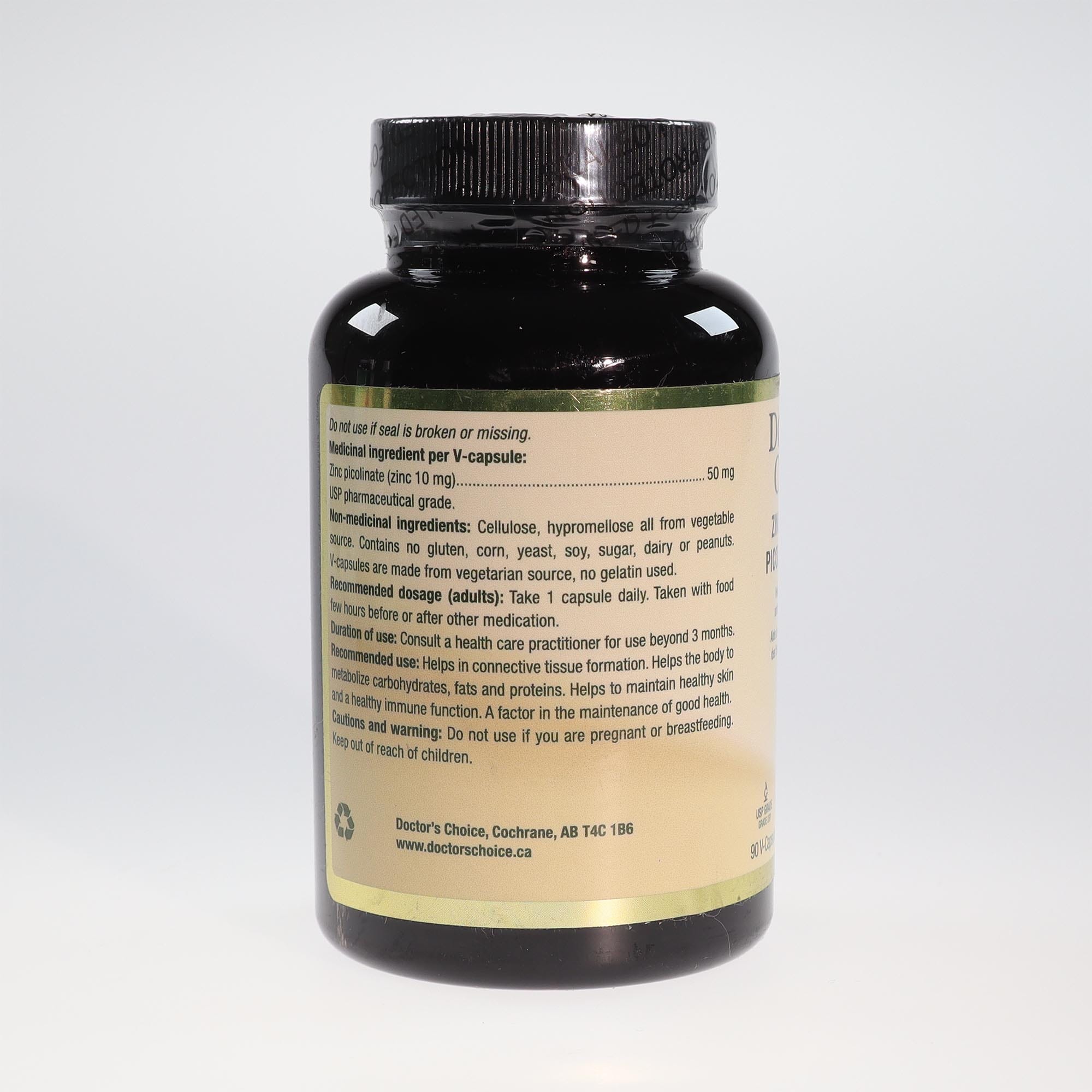
Medicinal Ingredient (per vegetable capsule):
Zinc picolinate — 50 mg, providing 10 mg elemental zinc.
Non-Medicinal Ingredients: Cellulose and hypromellose, from vegetable sources.
Product Form: Vegetable capsules.
Net Contents: 90 capsules.
Canadian Natural Product Number: NPN 80016680.
Storage: Keep tightly closed in a cool, dry place, protected from excessive heat and moisture.
Safety & Important Information
Do not use if pregnant or breastfeeding, according to the manufacturer’s product warning.
Take only as directed.
Consult a healthcare practitioner for use beyond three months.
Zinc may interact with certain medications, including tetracycline and quinolone antibiotics and penicillamine. Take a few hours before or after other medications, according to the current package directions.
Excessive zinc supplementation over time can interfere with copper absorption and contribute to copper deficiency.
Do not exceed the recommended dosage unless directed by a healthcare practitioner.
Keep out of reach of children.
For additional information about zinc’s nutritional roles and safety, see:

Reviews
There are no reviews yet.