Product Description
The Red Raspberry (Rubus idaeus) plant has a long history of use as a tea since ancient times across the six continents they are indigenous to, and their wide variety of applications (often owing to their astringent quality) is demonstrated nicely in this sentence taken from an in-depth, historical paper titled Rubus Pharmacology: Antiquity to the Present: “Leaves were chewed to strengthen gums and plastered to constrain shingles, head scurf, prolapsed eyes, and hemorrhoids.” (Hummer, 2010). Below are some of the benefits of Red Raspberry leaf tea that we employ today:
1. Supports Reproductive Health
Uterine Tonic: Red raspberry leaves are known to tone and strengthen the uterine wall muscles, potentially making labor more efficient and reducing complications during childbirth (Ferlemi and Lamari, 2016) In addition to these functions, it has been referred to as “a panacea for pregnancy” because it soothes morning sickness, nausea, and vomiting, and prevents miscarriage (Patel et al, 2004).
Menstrual Health: Red Raspberry leaf tea can help regulate menstrual cycles, reduce heavy bleeding, and alleviate cramps due to its antispasmodic and astringent properties.
Hormonal Balance: The leaves of red raspberry are thought to support hormonal equilibrium, making them beneficial during menopause or for managing PMS symptoms.
2. Rich Nutrient Profile
Red Raspberry leaf tea contains vitamins A, C, E, and B-complex, which support skin, eye, and overall health. It is also high in minerals including magnesium, calcium, potassium, and iron, which are vital for muscle function, bone health, and blood production. Additionally, it is a good source of phenols, terpenoids, alkaloids, steroids, and fatty acids (Tao et al, 2023), tannins, flavonoids (Gevrenova et al, 2024), esters, anthocyanins, and procyanidins (Ferlemi and Lamari, 2016) which reduce inflammation and protect cells from oxidative stress.
3. Improves Digestive Health
The astringent properties of Red Raspberry leaf tea help soothe the digestive tract and may help alleviate diarrhea (Patel et al, 2004), mild gastrointestinal irritation, and has even been used in some cases of ulcerative colitis (Gevrenova et al, 2024). It acts as a gentle detoxifier, supporting the liver and aiding in the removal of toxins.
4. Supports Skin Health
Red Raspberry Leaves have astringent properties; used topically as a poultice for minor wounds, acne, rashes, or other skin conditions, it can help promote faster healing and reduces swelling.
5. Promotes Hydration
In Traditional Chinese Medicine (TCM), Red Raspberry has been used to reinforce the kidney (Tao et al, 2023). Often used as an herbal tea, Red Raspberry leaf tea provides hydration while delivering essential nutrients. May be helpful for individuals looking for caffeine-free alternatives to traditional teas.
6. Gentle Detoxification
Acts as a mild diuretic, Red Raspberry leaf tea helps the body eliminate excess water and toxins, thus supporting kidney function and urinary tract health.
7. Soothes Sore Throats
Red Raspberry leaf tea may be sipped or even gargled to alleviate throat irritation or inflammation.
Suggested preparation method:
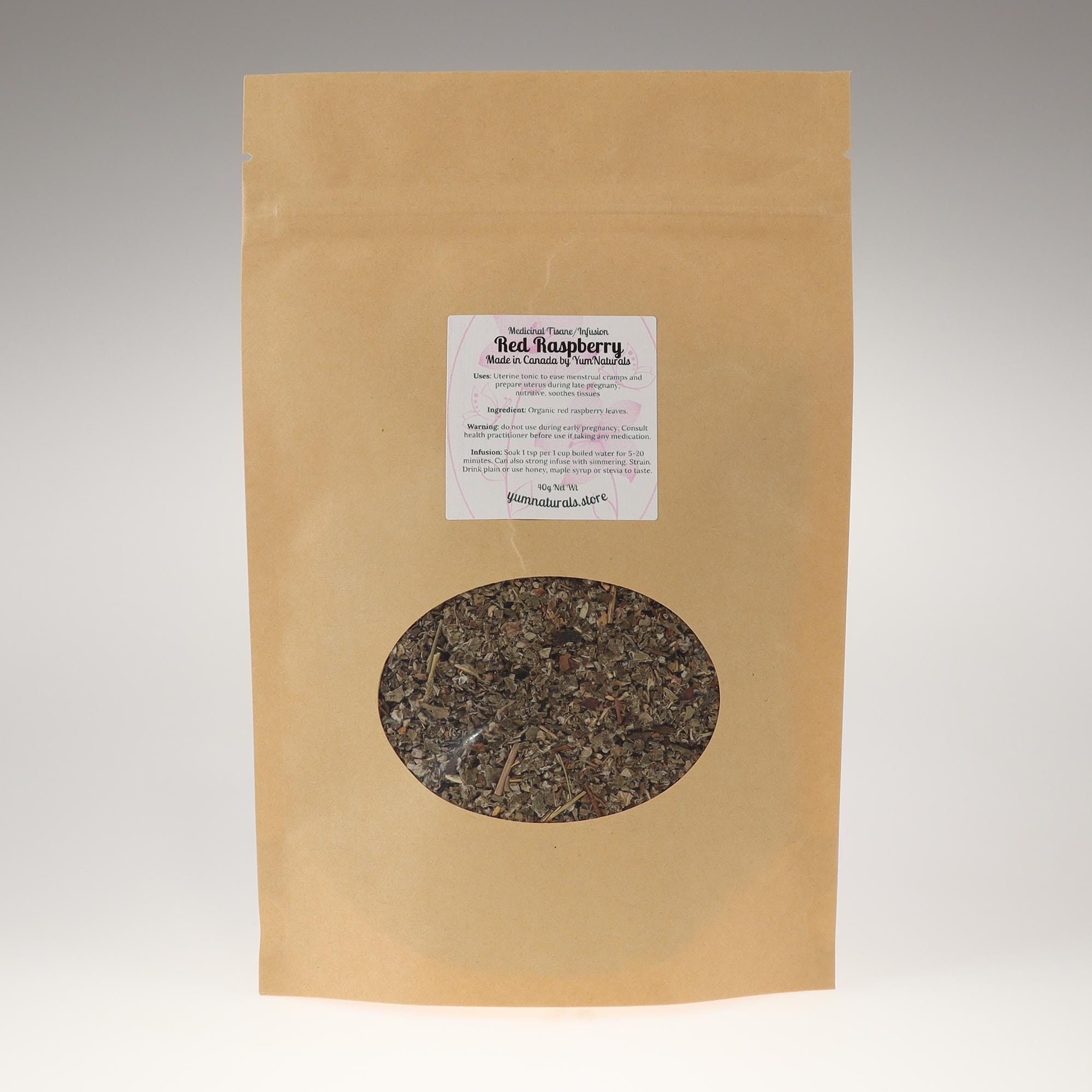
Soak 1 tsp per 1 cup boiled water for 5-20 minutes. Can also strong infuse with simmering. Strain. Savour the full earthy flavour on its own, or add a touch of honey for a sweet twist.
Precautions: Do not use during early pregnancy; women in late pregnancy, or anyone taking medications should consult healthcare provider before using.
Avoid excessive use if prone to constipation due to its astringent nature.