
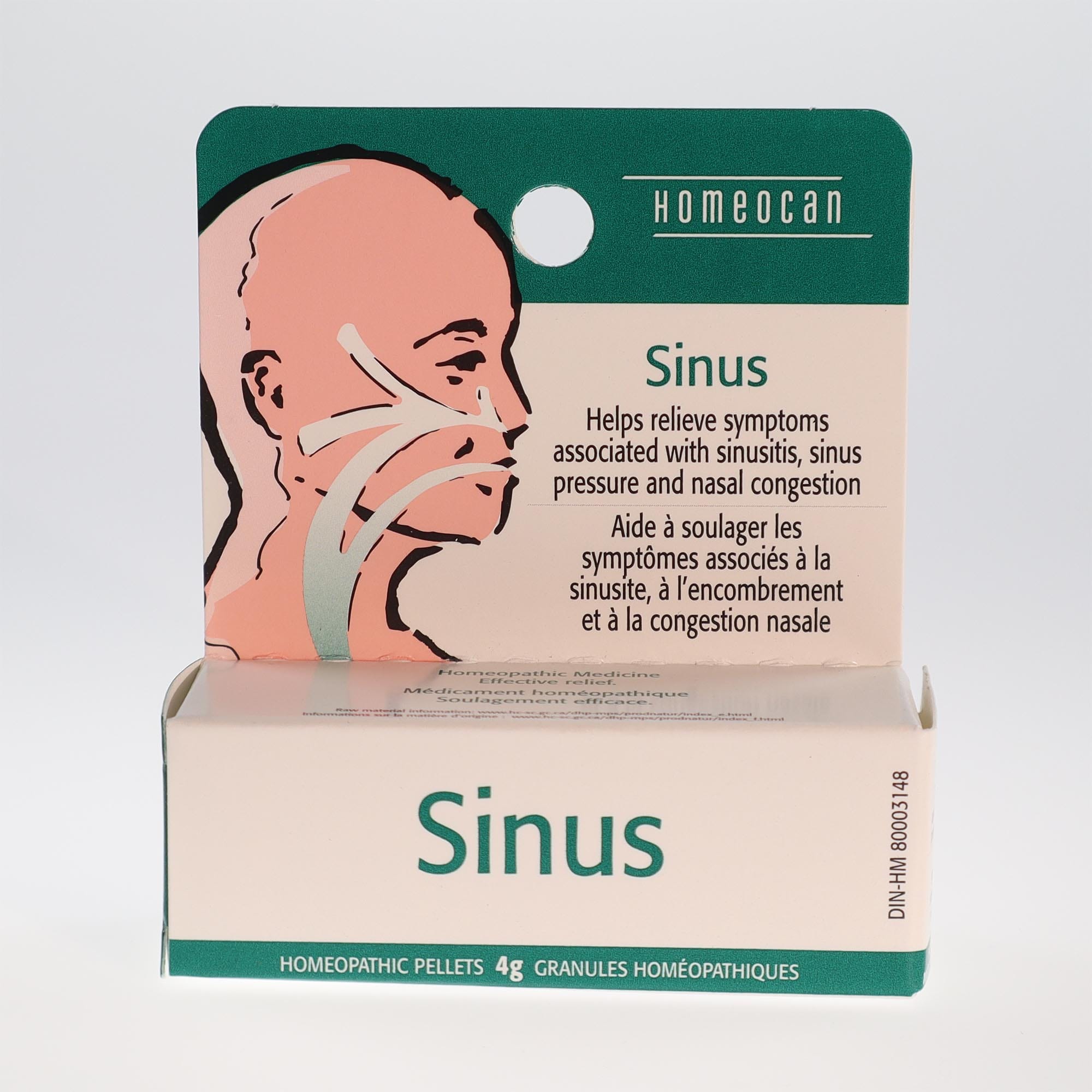
Homeocan Sinus – A Combination Homeopathic Remedy
Homeocan Sinus is a combination homeopathic preparation formulated with six medicinal ingredients traditionally associated with nasal congestion, sinus pressure and related respiratory symptom patterns.
According to Homeocan, the formula is intended for the relief of symptoms associated with sinusitis, sinus pressure and nasal congestion.
The sinuses are air-filled cavities located within the bones of the face and skull, connected to the nasal passages. Their lining produces mucus that normally drains through small openings into the nose. When the lining becomes inflamed or swollen, drainage may be disrupted, contributing to sensations of facial pressure, fullness and congestion.
Sinus-related symptoms can occur in connection with respiratory infections, allergies and other conditions affecting the nasal passages.
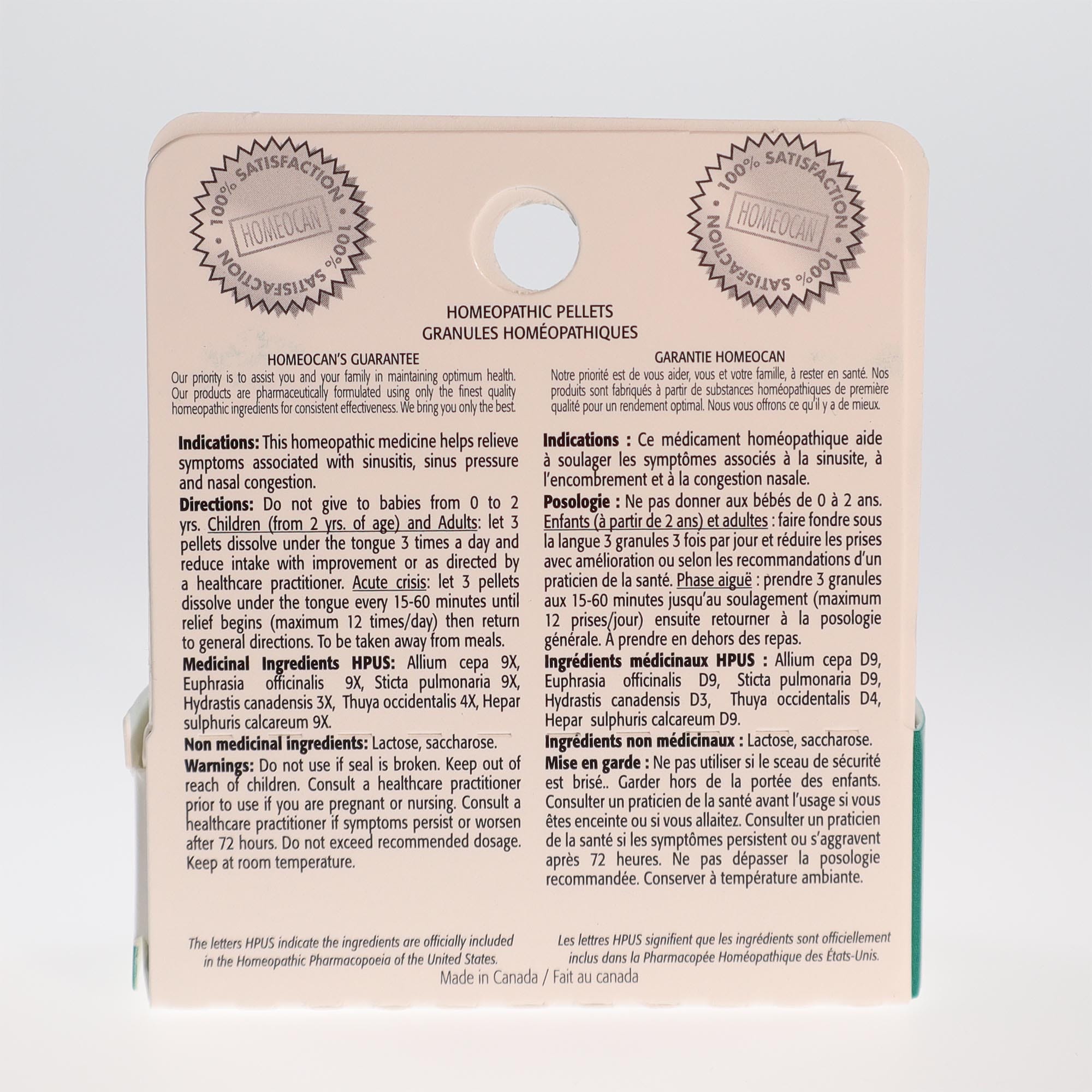
Homeocan Sinus brings together six traditional homeopathic ingredients in a convenient 4 g tube containing approximately 80 pellets.
A Combination of Traditional Homeopathic Ingredients
Unlike single-ingredient homeopathic remedies, combination preparations contain several homeopathic substances selected according to a shared theme or collection of traditionally recognized symptom characteristics.
Homeocan Sinus combines six ingredients described in classical homeopathic materia medica, each associated with particular aspects of nasal, sinus or upper respiratory symptom patterns.
Allium cepa 9X
Prepared from the common onion (Allium cepa), this remedy is traditionally associated in homeopathic materia medica with watery nasal discharge, sneezing and irritation affecting the nose and eyes.
The familiar experience of cutting an onion, which may produce watering eyes and a runny nose, is frequently used to illustrate the homeopathic principle of symptom similarity.
Euphrasia officinalis 9X
Commonly known as eyebright, Euphrasia officinalis has a long history in European herbal traditions and classical homeopathic practice.
In homeopathic materia medica, Euphrasia is particularly associated with watery eyes, eye irritation, sensitivity to light and accompanying nasal discharge.
Traditional descriptions often distinguish Euphrasia from Allium cepa according to whether the most prominent irritation affects the eyes or the nasal passages.
Sticta pulmonaria 9X
Sticta pulmonaria is a lichen traditionally described in homeopathic literature in relation to nasal dryness, congestion and sensations of pressure or fullness around the nasal passages.
Classical materia medica particularly associates this remedy with a sensation of nasal obstruction despite limited discharge, as well as irritation involving the upper respiratory tract.
Hydrastis canadensis 3X
Derived from goldenseal (Hydrastis canadensis), a North American perennial plant, Hydrastis is traditionally associated in homeopathic materia medica with thick mucus, sensations of congestion and irritation involving the mucous membranes.
Historical descriptions frequently discuss the consistency and character of nasal secretions as part of its traditional remedy profile.
Goldenseal herbal extracts and highly diluted homeopathic Hydrastis are different preparations and should not be considered interchangeable.
Thuya occidentalis 4X
Prepared from northern white cedar (Thuja occidentalis), this remedy has an established place in classical homeopathic literature.
Traditional descriptions associate Thuya with various mucous membrane characteristics, nasal congestion and recurring patterns of upper respiratory discomfort.
The original plant contains biologically active constituents, including substances that may be toxic at sufficient concentrations. Homeopathic preparations should not be confused with cedar essential oils or other concentrated botanical products.
Hepar sulphuris calcareum 9X
Hepar sulphuris calcareum is a traditional homeopathic preparation historically made from calcium-containing shell material and sulfur.
In classical homeopathic materia medica, it is particularly associated with sensitivity to cold air, tenderness, thick secretions and certain patterns of nasal or throat discomfort.
These characteristics form part of its traditional homeopathic classification rather than evidence of established therapeutic effects.
Taken together, these descriptions help explain how the ingredients in Homeocan Sinus are grouped within traditional homeopathic practice. They do not establish that the individual ingredients, or the combination itself, have demonstrated clinical effectiveness for sinus conditions.
Understanding Homeopathy and Its Principles
Homeopathy is a system of alternative medicine developed more than 200 years ago by German physician Samuel Hahnemann. It is based on several foundational principles, including like cures like, the minimum dose, and the selection of remedies according to traditionally recognized symptom characteristics.
Like Cures Like
One of the central principles of homeopathy is that a substance capable of producing certain symptoms in a healthy person may, when prepared homeopathically, be selected for someone experiencing similar symptoms.
For example, cutting an onion can cause burning, red, watery eyes and a runny nose. In traditional homeopathic practice, Allium cepa (the Latin name for onion) is sometimes selected when a person’s cold or allergy symptoms resemble those produced by exposure to an onion.
This approach is based on the homeopathic principle of symptom similarity, rather than on the conventional pharmacological actions of the original substance.
The Minimum Dose and Homeopathic Dilution
Another foundational principle of homeopathy is the use of diluted preparations.
Homeopathic remedies are traditionally prepared through successive stages of dilution and succussion, a process of vigorous agitation involving repeated shaking or impact. Succussion can be performed manually or with specialized mechanical equipment. Other techniques involving vibration or sonication have also been explored, although they are not necessarily interchangeable with recognized homeopathic preparation methods.
The degree of dilution depends on the preparation scale and potency assigned to each ingredient.
Unlike the 30CH single-ingredient remedies described elsewhere in the YumNaturals catalogue, Homeocan Sinus contains ingredients prepared at 3X, 4X and 9X potencies.
The designation X refers to the decimal dilution scale, in which each stage represents a tenfold dilution, traditionally followed by succussion.
A 3X preparation represents three successive 1:10 dilution stages, corresponding to a theoretical dilution of one part of the original substance in 10³ parts of the final preparation.
A 4X preparation represents four decimal dilution stages, corresponding to a theoretical dilution of one part in 10⁴.
A 9X preparation represents nine decimal dilution stages, corresponding to a theoretical dilution of one part in 10⁹.
These potency designations describe the dilution process rather than the absolute quantity of an ingredient present in each finished pellet.
Unlike extremely high homeopathic dilutions, preparations at 3X, 4X and 9X may contain measurable amounts of source-derived substances, depending on their composition, solubility and manufacturing process.
Homeocan Sinus combines ingredients prepared at these three potencies within one finished product.
The Concept of Information in Homeopathy
One of the most interesting, and scientifically debated, aspects of homeopathy concerns how its diluted preparations are believed to function.
Within homeopathic theory, some practitioners propose that successive dilution and succussion preserve information associated with the original substance, even when its molecules are no longer detectable. This concept is sometimes described in terms of an energetic imprint, information transfer or the memory of water.
Proponents suggest that this retained information may interact with the body’s own regulatory or healing processes.
However, these proposed mechanisms have not been scientifically established, and there is no reliable evidence demonstrating that water retains therapeutically meaningful information from substances diluted beyond molecular detection.
The concept remains part of homeopathic philosophy and ongoing debate rather than an accepted explanation within modern chemistry or pharmacology.
For lower-dilution preparations such as 3X, 4X and 9X, the potential presence of source-derived material is also relevant when discussing the composition of the finished remedy. Nevertheless, clinical effectiveness cannot be assumed from the dilution method or the proposed concept of retained information.
Individualized Homeopathic Remedy Selection and Combination Formulas
Classical homeopathy places considerable emphasis on the individual rather than simply matching a remedy to the name of a disease or condition.
In traditional homeopathic practice, remedy selection involves considering a person’s overall collection of symptoms and characteristics, including:
- What makes symptoms better or worse.
- Environmental influences, such as temperature, weather or time of day.
- The location of symptoms and whether they occur predominantly on one side of the body.
- Other physical symptoms occurring alongside the main complaint.
- Emotional characteristics, temperament and accompanying states of mind.
This detailed approach is intended to identify the remedy considered most closely aligned with the individual’s overall symptom picture, sometimes referred to as their constitutional profile. Combination homeopathic remedies follow a somewhat different approach. Rather than selecting one remedy according to a person’s complete constitutional picture, a combination formula brings together multiple traditionally recognized homeopathic ingredients associated with a particular collection of symptoms or common area of concern. In the case of Homeocan Sinus, the formula combines ingredients traditionally associated with nasal obstruction, watery or thick secretions, sinus pressure, sensitivity to cold and other upper respiratory symptom characteristics. These principles provide historical and educational context for understanding how combination remedies such as Homeocan Sinus are formulated and classified within homeopathic practice.


Reviews
There are no reviews yet.