
About Tissue Salts – 12-in-One Combination
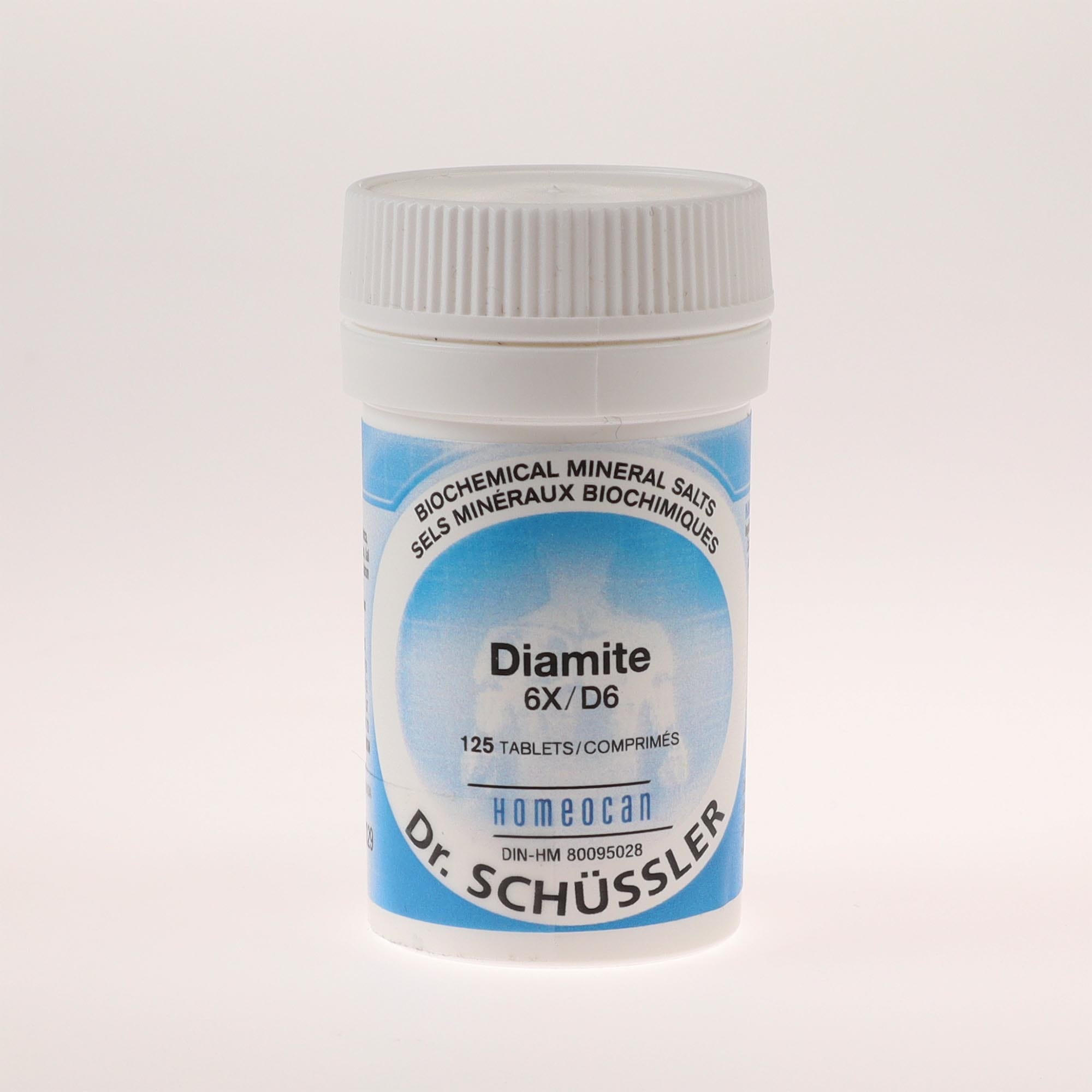
Every brand has its own name for the 12-in-one tissue salt (aka Schüßler cell salts) formula: Unda’s was “Melange”, but their manufacturer has closed their facilities, so we’re going with the tried-and-true Canadian company, Homeocan. Known as Diamite, Homeocan’s version of the 12-in-one offers a convenient alternative to selecting and taking the twelve individual tissue salts separately. Each tablet contains the complete traditional collection at a 6X decimal homeopathic potency.
The Schüßler tissue-salt system was developed in the nineteenth century by German physician Dr. Wilhelm Heinrich Schüßler. His biochemical approach associated particular mineral compounds with different tissues and characteristic patterns of symptoms. Individual tissue salts were traditionally selected for their particular associations with the skin, muscles, nerves, digestion, connective tissues, or body fluids. The twelve-salt combination instead brings these preparations together in one formula. This is a homeopathic combination preparation, not a conventional multivitamin or mineral supplement.
Ingredients & Product Composition
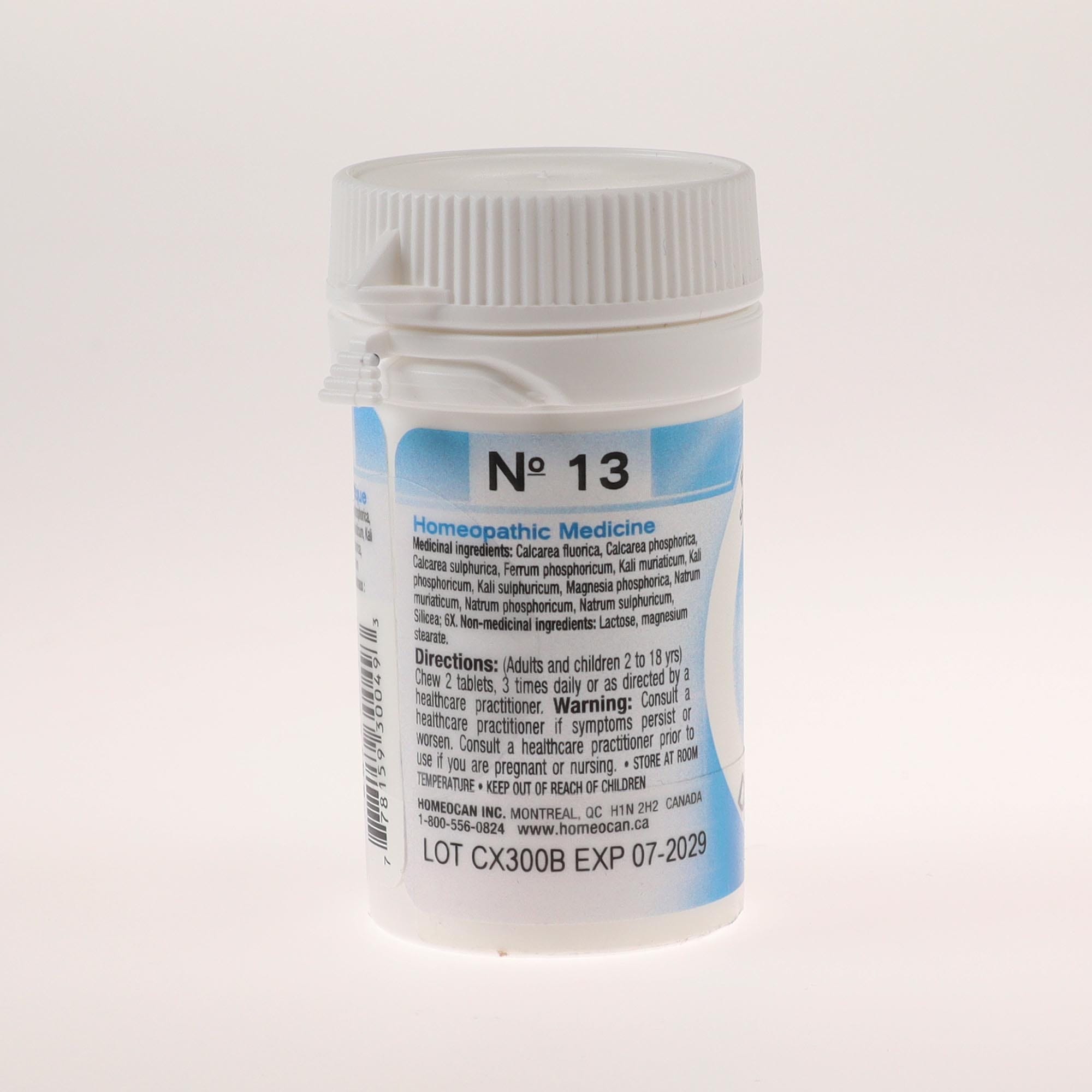
Medicinal Ingredients: Calcarea fluorica 6X, Calcarea phosphorica 6X, Calcarea sulphurica 6X, Ferrum phosphoricum 6X, Kali muriaticum 6X, Kali phosphoricum 6X, Kali sulphuricum 6X, Magnesia phosphorica 6X, Natrum muriaticum 6X, Natrum phosphoricum 6X, Natrum sulphuricum 6X, and Silicea 6X.
Non-Medicinal Ingredients: Lactose and magnesium stearate.
Contains: Lactose (milk-derived).
The Twelve Tissue Salts in the Combination
The formula contains the twelve principal mineral preparations of the Schüßler biochemical system:
- Calcarea Fluorica – Calcium Fluoride – 6X – Traditionally associated with connective-tissue firmness and elasticity, ligaments, supporting tissues, tooth enamel, and minor joint discomfort. In classical biochemic literature, Calcarea fluorica is sometimes described as the elasticity salt because of its historical association with the body’s flexible and supporting structures
- Calcarea Phosphorica – Calcium Phosphate – 6X – Historically associated with bones, teeth, skeletal development, and constitutional patterns involving growth and physical vitality. Calcium phosphate is also a mineral constituent of the human skeleton.
- Ferrum Phosphoricum – Iron Phosphate – 6X – Traditionally associated with the first signs of minor inflammatory discomfort, mild fever, and constitutional patterns involving warmth, redness, or physical tiredness. Historical biochemic literature sometimes refers to Ferrum phosphoricum as the first-stage inflammation salt.
- Kali Muriaticum – Potassium Chloride – 6X – Traditionally associated with the skin, mucous membranes, and constitutional patterns involving thick white or greyish secretions. Older Schüßler references also discuss Kali muriaticum in relation to the second stage of certain minor inflammatory complaints.
- Kali Phosphoricum – Potassium Phosphate – 6X – Historically associated with the nervous system, mental fatigue, nervous tension, irritability, and periods of physical or intellectual overexertion. It is sometimes referred to as the nerve salt in traditional biochemic literature.
- Kali Sulphuricum – Potassium Sulfate – 6X – Traditionally associated with the condition of the skin and complexion, mucous membranes, and certain constitutional patterns involving dry, flaky, or irritated skin. Historical descriptions also associate this preparation with yellowish secretions and discomfort perceived as more comfortable in fresh air.
- Magnesia Phosphorica – Magnesium Phosphate – 6X – Traditionally associated with muscular comfort, cramping, spasmodic sensations, and certain patterns of menstrual or abdominal discomfort. Classical homeopathic descriptions frequently associate Magnesia phosphorica with cramping sensations that seem more comfortable with warmth or gentle pressure.
- Natrum Muriaticum – Sodium Chloride – 6X – Historically associated with the distribution of moisture, fluid balance, dryness, watery secretions, and constitutional patterns involving the skin and mucous membranes.
- Natrum Phosphoricum – Sodium Phosphate – 6X – Traditionally associated with digestive acidity, sour belching, abdominal fullness, bloating, and certain patterns of mild indigestion. Older biochemic references also describe its association with acid-related constitutional complaints.
- Natrum Sulphuricum – Sodium Sulfate – 6X – Historically associated with digestive comfort, fluid distribution, and constitutional patterns involving the liver, gallbladder, and bowel function. Traditional accounts particularly describe abdominal bloating, flatulence, and digestive discomfort.
- Silicea – Silicon Dioxide – 6X – Traditionally associated with the skin, hair, nails, connective tissues, and certain constitutional patterns involving tissue firmness. Silicea is sometimes described in traditional tissue-salt literature in relation to brittle nails, skin concerns, and sensitivity to cold.
- Calcarea Sulphurica – Calcium Sulfate – 6X – Historically associated with minor skin irritation, blemishes, tender gums, and constitutional patterns involving persistent or recurring skin complaints. Traditional references sometimes describe Calcarea sulphurica in relation to later stages of certain inflammatory complaints.
Why Choose a Twelve-Salt Combination?
The traditional Schüßler approach generally involves selecting individual tissue salts according to their associated symptom patterns. A twelve-salt combination offers another approach by bringing the complete traditional collection together in one preparation. Rather than choosing separate tablets for each mineral association, customers can use a single combination product containing all twelve salts. The terms cell salts, tissue salts, and biochemical salts refer to the traditional homeopathic preparation system rather than to conventional mineral supplementation.
A Primer on Tissue Salts
What Are Tissue Salts?
Tissue salts, also known as cell salts, biochemical salts, or Schüßler salts, are low-potency homeopathic preparations made from mineral substances. The system was developed during the nineteenth century by German physician Dr. Wilhelm Heinrich Schüßler (1821–1898), who proposed that certain inorganic mineral compounds were important to the normal functioning of human tissues. Schüßler’s original system identified twelve principal tissue salts, each associated with particular minerals and traditional applications. Later practitioners expanded the system to include additional salts.
The names of these preparations generally reflect the mineral substances from which they are made. Examples include Calcarea phosphorica (calcium phosphate), Ferrum phosphoricum (iron phosphate), Natrum muriaticum (sodium chloride), and Magnesia phosphorica (magnesium phosphate).
The Biochemical System of Dr. Schüßler
Schüßler developed his biochemical approach from nineteenth-century observations concerning mineral constituents found in human tissues. He believed that disturbances in the distribution or utilization of certain mineral salts could be associated with characteristic patterns of symptoms. His therapeutic system used specially prepared mineral substances selected according to these traditional associations. Within this framework, individual tissue salts were historically connected with different aspects of tissue structure and function, including bones, connective tissues, muscles, nerves, and the body’s fluid-regulation processes. These ideas are part of the historical framework of biochemic medicine.
How Are Tissue Salts Prepared?
Tissue salts are prepared using homeopathic methods, typically through successive dilution and trituration or other processing procedures specified in homeopathic pharmacopoeias. Traditional Schüßler tissue salts are prepared according to principles of the biochemical system, with manufacturing procedures and excipients varying according to the producer and the applicable homeopathic pharmacopoeia.
Most preparations in the traditional tissue-salt range are supplied in decimal potencies, commonly 6X or 12X, depending on the individual mineral and manufacturer. The letter X indicates a decimal potency. Each successive dilution stage represents one part of the preceding preparation combined with nine parts of a suitable diluent or carrier, followed by the prescribed homeopathic preparation process. For example, a 6X preparation has undergone six successive 1:10 dilution stages. This corresponds to a nominal dilution factor of one part in one million relative to the starting preparation.
Because tissue salts are homeopathic preparations, they should not be confused with conventional nutritional mineral supplements. Their mineral content and intended use are different from those of products formulated to supply measurable dietary quantities of calcium, magnesium, potassium, or other essential minerals.
Tissue Salts in Traditional Homeopathic Practice
Within the Schüßler system, tissue salts are selected according to their traditional mineral associations and the individual’s overall pattern of symptoms. Some are historically connected with muscular comfort, others with digestive patterns, skin and connective tissues, or nervous-system complaints. Individual preparations contain a single mineral-derived homeopathic ingredient, while combination products bring together several tissue salts. Individual tissue salts provide a way to explore the traditional system one preparation at a time.
Safety & Important Information
This twelve-salt combination is a homeopathic preparation traditionally used within the Schüßler biochemical system. It is not intended to replace conventional nutritional mineral supplements or medically established treatment of mineral deficiencies, electrolyte disorders, or other medical conditions.






susan r. –
Great product!