
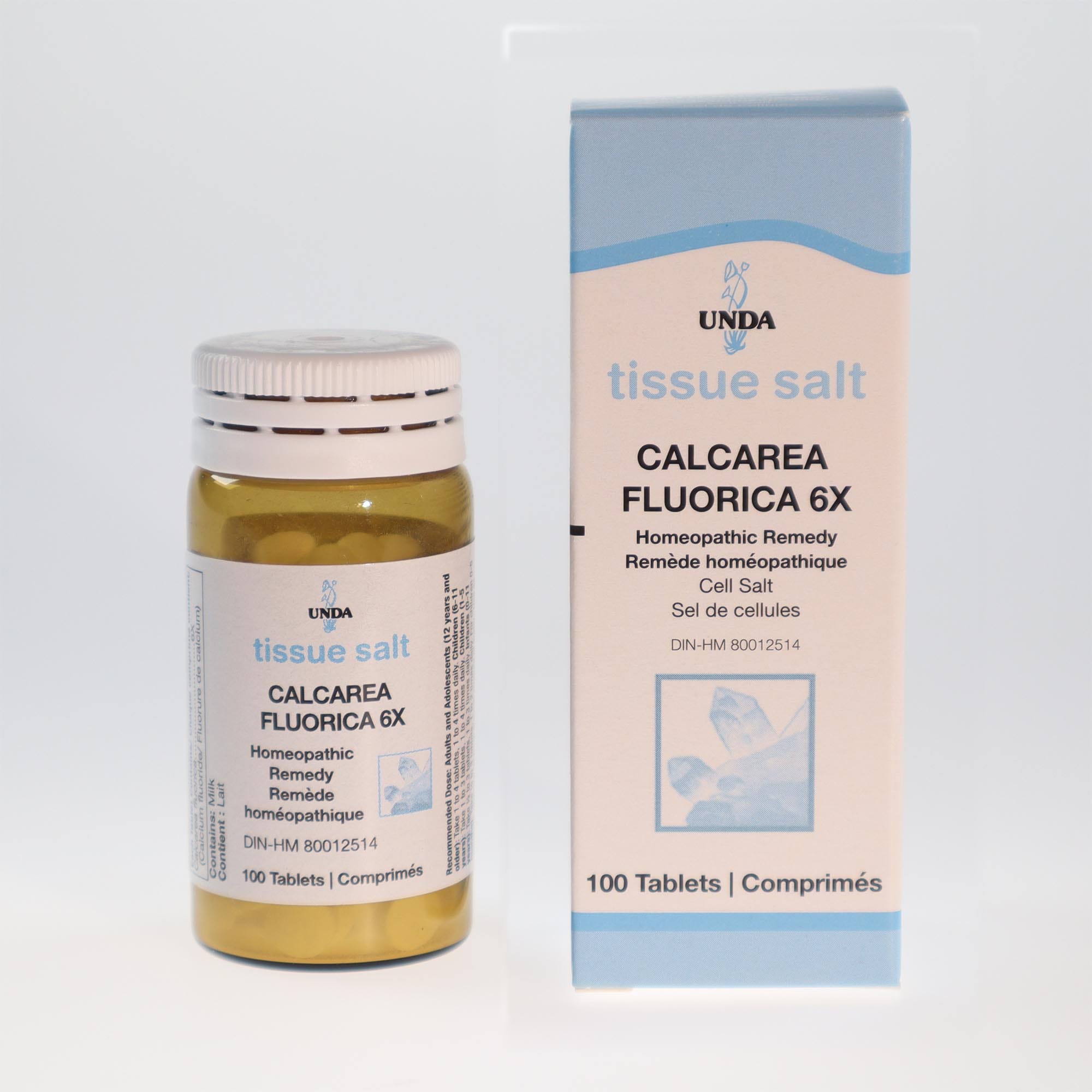

About Calcarea Fluorica 6X
Calcarea Fluorica 6X is a traditional homeopathic tissue-salt preparation made from calcium fluoride, a naturally occurring mineral compound. It belongs to the original twelve Schüßler Tissue Salts, a family of low-potency homeopathic mineral preparations based on the biochemical system developed by Dr. Wilhelm Heinrich Schüßler in the nineteenth century.
Calcarea fluorica, also known as Calc fluor or Calcarea fluorata, has a long history of use in classical homeopathy and the Schüßler biochemical system, particularly in relation to connective tissues, skin elasticity, joint comfort, tooth enamel and the structural condition of various tissues.
Traditional homeopathic product labeling also describes Calcarea fluorica in relation to temporary relief of minor joint discomfort, particularly symptoms associated with cracking joints.
These applications reflect historical homeopathic practice rather than established clinical evidence.
Traditional Homeopathic Perspective
Calcarea fluorica is a homeopathic preparation traditionally derived from calcium fluoride, a mineral compound consisting of calcium and fluoride ions.
In classical homeopathic and Schüßler literature, Calcarea fluorica has a traditional profile involving connective tissues, ligaments, tendons, skin, teeth and certain constitutional patterns associated with tissue firmness or elasticity.
Historical homeopathic descriptions frequently associate this preparation with cracking or stiffness of joints, minor joint discomfort, hardened or thickened tissue, and changes in the elasticity of skin or supporting structures.
Traditional references also discuss Calcarea fluorica in relation to brittle or sensitive teeth, the condition of tooth enamel, dry or cracked skin, and constitutional patterns involving the body’s supportive tissues.
Within older biochemic literature, Calcarea fluorica is sometimes called the elasticity salt because of its historical association with the flexible and supporting structures of the body.
It is also discussed in relation to hardened tissue formations, calluses, and certain patterns of swelling or tissue thickening.
These descriptions reflect the traditional homeopathic symptom profile. They do not establish that the preparation dissolves deposits, strengthens ligaments, restores connective-tissue elasticity, repairs tooth enamel or reverses tissue degeneration.
Within the Schüßler biochemical system, Calcarea fluorica is recognized as Tissue Salt No. 1.
A Primer on Tissue Salts
What Are Tissue Salts?
Tissue salts, also known as cell salts, biochemical salts, or Schüßler salts, are low-potency homeopathic preparations made from mineral substances.
The system was developed during the nineteenth century by German physician Dr. Wilhelm Heinrich Schüßler (1821–1898), who proposed that certain inorganic mineral compounds were important to the normal functioning of human tissues.
Schüßler’s original system identified twelve principal tissue salts, each associated with particular minerals and traditional applications. Later practitioners expanded the system to include additional salts.
The names of these preparations generally reflect the mineral substances from which they are made. Examples include Calcarea phosphorica (calcium phosphate), Ferrum phosphoricum (iron phosphate), Natrum muriaticum (sodium chloride), and Magnesia phosphorica (magnesium phosphate).
The Biochemical System of Dr. Schüßler
Schüßler developed his biochemical approach from nineteenth-century observations concerning mineral constituents found in human tissues.
He believed that disturbances in the distribution or utilization of certain mineral salts could be associated with characteristic patterns of symptoms. His therapeutic system used specially prepared mineral substances selected according to these traditional associations.
Within this framework, individual tissue salts were historically connected with different aspects of tissue structure and function, including bones, connective tissues, muscles, nerves, and the body’s fluid-regulation processes.
These ideas are part of the historical framework of biochemic medicine. Modern physiology recognizes the importance of minerals in normal cellular function, but this does not establish Schüßler’s proposed mechanisms or demonstrate that homeopathic tissue salts correct cellular mineral imbalances.
How Are Tissue Salts Prepared?
Tissue salts are prepared using homeopathic methods, typically through successive dilution and trituration or other processing procedures specified in homeopathic pharmacopoeias.
Traditional Schüßler tissue salts are prepared according to principles of the biochemical system, with manufacturing procedures and excipients varying according to the producer and the applicable homeopathic pharmacopoeia.
Most preparations in the traditional tissue-salt range are supplied in decimal potencies, commonly 6X or 12X, depending on the individual mineral and manufacturer.
The letter X indicates a decimal potency. Each successive dilution stage represents one part of the preceding preparation combined with nine parts of a suitable diluent or carrier, followed by the prescribed homeopathic preparation process.
For example, a 6X preparation has undergone six successive 1:10 dilution stages. This corresponds to a nominal dilution factor of one part in one million relative to the starting preparation.
Because tissue salts are homeopathic preparations, they should not be confused with conventional nutritional mineral supplements. Their mineral content and intended use are different from those of products formulated to supply measurable dietary quantities of calcium, magnesium, potassium, or other essential minerals.
Tissue Salts in Traditional Homeopathic Practice
Within the Schüßler system, tissue salts are selected according to their traditional mineral associations and the individual’s overall pattern of symptoms.
Some are historically connected with muscular comfort, others with digestive patterns, skin and connective tissues, or nervous-system complaints.
Individual preparations contain a single mineral-derived homeopathic ingredient, while combination products bring together several tissue salts.
Individual tissue salts provide a way to explore the traditional system one preparation at a time.
Although tissue salts have a long history of homeopathic use, high-quality clinical evidence has not established that they reliably correct mineral deficiencies, restore cellular mineral balance, or treat medical conditions.
About Calcarea Fluorica in the Tissue-Salt Tradition
Calcarea fluorica is designated Tissue Salt No. 1 in the traditional Schüßler system.
It is historically associated with connective-tissue firmness and elasticity, particularly in the skin, ligaments, tendons and other supporting tissues.
Classical biochemic literature also discusses Calcarea fluorica in relation to teeth, tooth enamel, minor joint discomfort and constitutional patterns involving hardened or thickened tissues.
Some traditional references associate it with the condition of blood-vessel walls, hardened glands, calluses and tissue changes involving loss of elasticity.
These descriptions are part of the historical biochemical framework. They do not demonstrate that Calcarea Fluorica 6X improves vascular elasticity, treats varicose veins, restores cartilage, repairs ligaments or changes the structure of hardened tissue.
Calcium Fluoride, Tooth Enamel and Connective Tissue: Understanding the Difference
Calcium fluoride is an inorganic mineral compound with the chemical formula CaF₂. It occurs naturally as the mineral fluorite, also known as fluorspar.
The compound consists of calcium and fluoride ions and should not be confused with elemental fluorine, an extremely reactive chemical element.
Calcium and the Structural Tissues
Calcium is an essential mineral involved in the formation and maintenance of bones and teeth, muscle contraction, nerve signalling, and several cellular processes.
Most of the body’s calcium is stored in bones and teeth, where calcium-containing mineral compounds contribute to their hardness and structural properties.
In tooth enamel, the principal mineral is hydroxyapatite, a crystalline calcium phosphate compound.
Fluoride and Tooth Enamel
Fluoride has a recognized role in dental science. When present at appropriate concentrations, particularly through topical dental products, fluoride can contribute to the remineralization of enamel and help reduce its susceptibility to acid-related mineral loss.
The effects of conventional fluoride treatments depend on factors including concentration, chemical form, frequency of exposure, and contact with the tooth surface.
The presence of calcium fluoride as the starting material in a homeopathic preparation does not establish that Calcarea Fluorica 6X provides the same dental benefits as fluoridated toothpaste, professionally applied fluoride varnish, or other evidence-based dental treatments.
Homeopathic tissue-salt tablets should not replace regular oral hygiene, appropriate fluoride-based dental care, or professional assessment of dental problems.
Connective Tissue and Elasticity
Connective tissues include tendons, ligaments, cartilage, skin-supporting structures and the connective framework surrounding many organs.
Their mechanical properties are largely determined by the composition and organization of proteins such as collagen and elastin, together with other components of the extracellular matrix.
Collagen contributes tensile strength, while elastin allows certain tissues to stretch and return toward their original shape.
These established biological functions do not demonstrate that calcium fluoride tissue-salt preparations increase collagen production, improve elastin function, strengthen connective tissue, or restore joint mobility.
The traditional association between Calcarea fluorica and tissue elasticity should therefore be understood as part of the Schüßler system rather than a clinically established effect of the product.
Ingredients & Product Composition
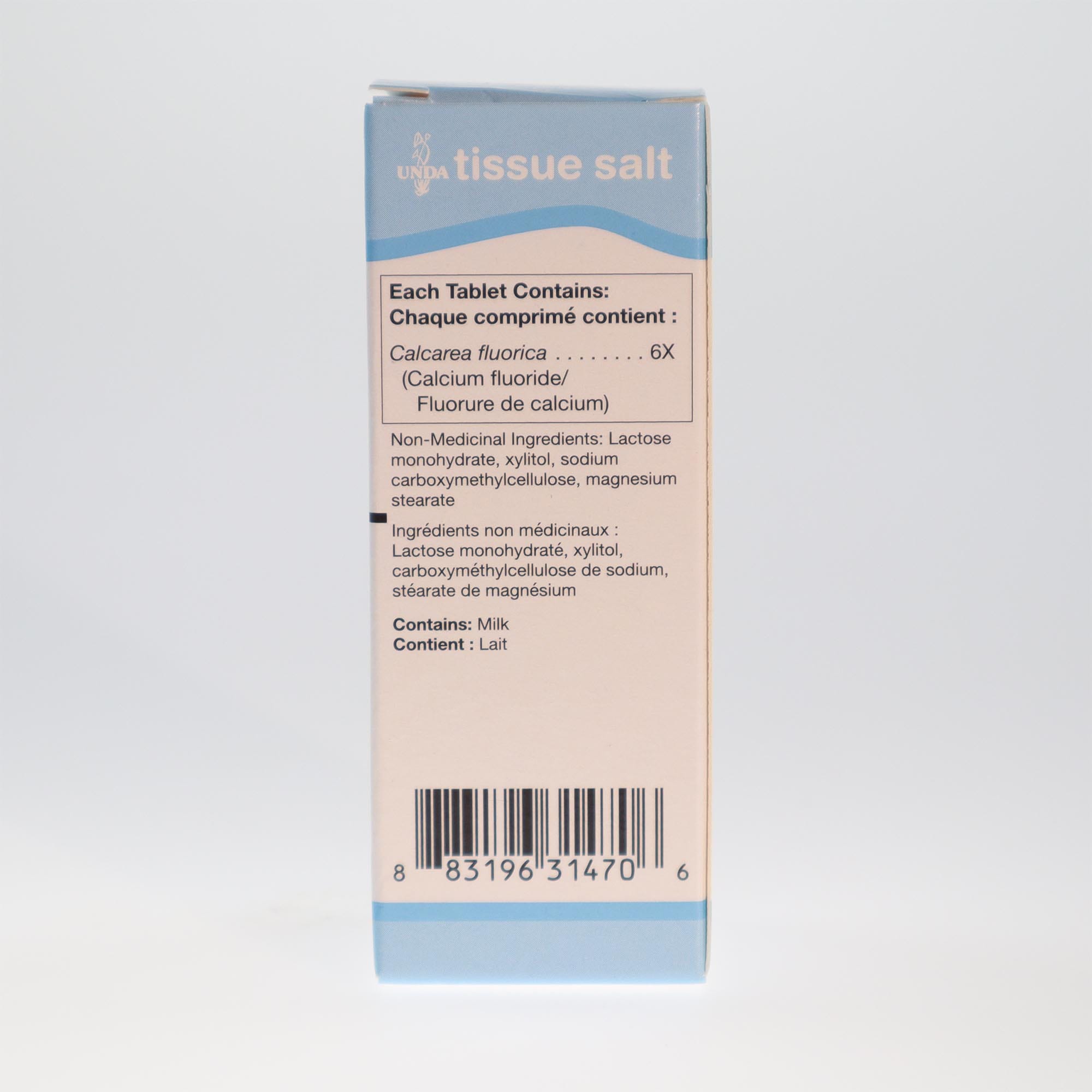
Medicinal Ingredient: Calcarea fluorica (calcium fluoride) 6X.
Non-Medicinal Ingredients: Lactose monohydrate (milk), xylitol, sodium carboxymethylcellulose, and magnesium stearate.
Product Details
Product Family: Schüßler Tissue Salts
Potency: 6X (decimal homeopathic potency)
Product Form: Homeopathic tablets
Package Quantity: Refer to the currently supplied product package.
Storage: Follow the storage instructions on the current product label, generally keeping tablets in a cool, dry place away from moisture.
Safety & Important Information
Calcarea Fluorica 6X is a homeopathic preparation traditionally used within the Schüßler biochemical system. It is not a substitute for medically established treatment of joint disorders, connective-tissue diseases, dental decay, enamel damage, or other medical conditions.
Do not use if you have had an allergic reaction to the product or any of its ingredients. Check the current product label for lactose and other potential allergens.
Consult a healthcare practitioner before use if pregnant or breastfeeding. If symptoms persist or worsen, consult a healthcare practitioner.
Persistent joint pain, significant swelling, restricted joint movement, dental pain, damaged enamel or unexplained tissue changes should receive appropriate professional assessment.
Keep out of reach of children. Do not use if the safety seal is missing or broken.
Homeopathic uses are based on traditional practice and do not establish clinical effectiveness for treating medical conditions.



Reviews
There are no reviews yet.