Product Description
Boron is a trace element which influences the metabolism of nutrients (including calcium and magnesium) involved in the maintenance of strong bones and may play a role in hormone regulation. Known to nutritional professionals as the “calcium helper”, boron plays a vital role in bone health because it assists calcium absorption and utilization in the body. Boron may help prevent atherosclerosis, improve brain function and cognitive functioning, reduce HDL cholesterol, affect thyroid hormone levels, alleviate harmful effects of vitamin D, magnesium, and potassium deficiency in post menopausal bone loss, play a role in the prevention of osteoporosis, be of benefit in the treatment of arthritis, and prevent calcium loss in postmenopausal women.
Although no recommended dietary allowance (RDA) has been established for boron, the average daily intake is highly variable, having been estimated at between 0.5 and up to 10 mg per day, with 3 mg per day demonstrating useful benefits for bone health (Rondanelli, 2020). Boron is found in most tissues, but is concentrated in the bone, spleen, and thyroid, indicating boron’s functions in bone metabolism and suggesting a potential role for boron in hormone metabolism. Boron is found in relatively high levels in foods of plant origin, such as black beans, peaches, apricots, spinach, strawberries, apples, cantaloupe and tomatoes. Many of us do not get enough of these items in our diet and boron supplements can help. Meat and fish are poor dietary sources of boron.
Bone Health
An adult human has 206 bones, which are constantly being renewed and remodeled. Bones perform several important roles in the body. Bones form a framework that supports the body and protects soft organs. They are an essential part of movement because muscles attach here and the arrangement of bones determines the type of movement that can be done. Bones are important storehouses of minerals, including the major buffer, calcium. They also contain an inner core of marrow that produces blood.
Most people do not think about bone health until they are in their later years. This is a mistake because significant increases in bone density can only be made in childhood or early adulthood (up to age 30). For the remainder of our lives the goal is to maintain our bones.
Osteomalacia is an inadequacy of bone mineralization. There is a normal amount of bone but it is weak. Weight bearing bones may be deformed. Eating a well balanced diet that provides sufficient amounts of protein, calcium and trace minerals can rectify this problem.
Not just for bones…
Boron can help the body detoxify certain compounds – see Amandha Vollmer’s blog. It is essential for the integrity and function of cell walls and for the way signals are transmitted across membranes. Boron is distributed throughout the body, with the highest concentration in the parathyroid glands followed by bones and dental enamel. It is essential for healthy bone and joint function, regulating the absorption and metabolism of calcium, magnesium and phosphorus through its influence on the parathyroid glands. With this, boron is to the parathyroids what iodine is to the thyroid.
Boron deficiency causes the parathyroids to become overactive, releasing too much parathyroid hormone which raises the blood level of calcium by releasing calcium from bones and teeth. This then leads to arthritis, osteoporosis and tooth decay.
With advancing age, high blood levels of calcium lead to calcification of soft tissues causing muscle contractions and stiffness; calcification of endocrine glands, especially the pineal gland and the ovaries; arteriosclerosis; kidney stones and calcification of the kidneys, ultimately leading to kidney failure.
A “boosts testosterone” claim is based on a USDA study of boron-deprived postmenopausal women in which boron supplements increased testosterone levels. Serum testosterone levels in deficient postmenopausal women, however, are more than 10 times lower than those found in normal men and in strength athletes. There are no studies to suggest that boron supplementation alone will augment testosterone production or promote muscle growth in healthy men. In fact, a number of studies have shown no effect of boron supplements on serum testosterone in either men or women consuming a typical diet. Studies among bodybuilders have yielded similar “non-effects” of boron supplements on measures of lean body mass, body fat and strength.
Low boron diets have been associated with reduced testosterone levels and boron supplements have been shown to increase serum levels of testosterone in deficient postmenopausal women. This finding has spawned a number of boron supplements targeting athletes and body builders and touting the benefits of boron for boosting testosterone levels, strength and muscle mass. As part of a balanced multi-vitamin/mineral supplement, boron may have beneficial effects on maintaining adequate calcium and magnesium metabolism for optimal bone health. Athletes, if not deficient, looking to use boron supplements as an answer to increasing serum testosterone levels and improving muscle mass and strength should look elsewhere.
A review of animal and human research on boron yielded the following information, which points to a much more comprehensive view of boron.
Deficiency in boron has been shown to contribute to abnormal embryo development, decreased sperm count, ovarian deterioration, damage in reproductive function, decrease in electrical activity in the brain, suboptimal mineral metabolism, poor manual dexterity and impaired hand-eye coordination.
Boron supplementation was found to increase steroid hormone levels (testosterone) if deficient, increase bone growth and strength, and augment estrogen function. Therefore, boron may help prevent atherosclerosis, improve brain function and cognitive functioning, reduce HDL cholesterol, affect thyroid hormone levels, alleviate harmful effects of vitamin D, magnesium, and potassium deficiency in post menopausal bone loss, play a role in the prevention of osteoporosis, be of benefit in the treatment of arthritis, and prevent calcium loss in postmenopausal women.
In the form of borax (sodium borate), boron was shown to have a protective effect against on toxicity metabolism in animal studies (Alak, 2019).
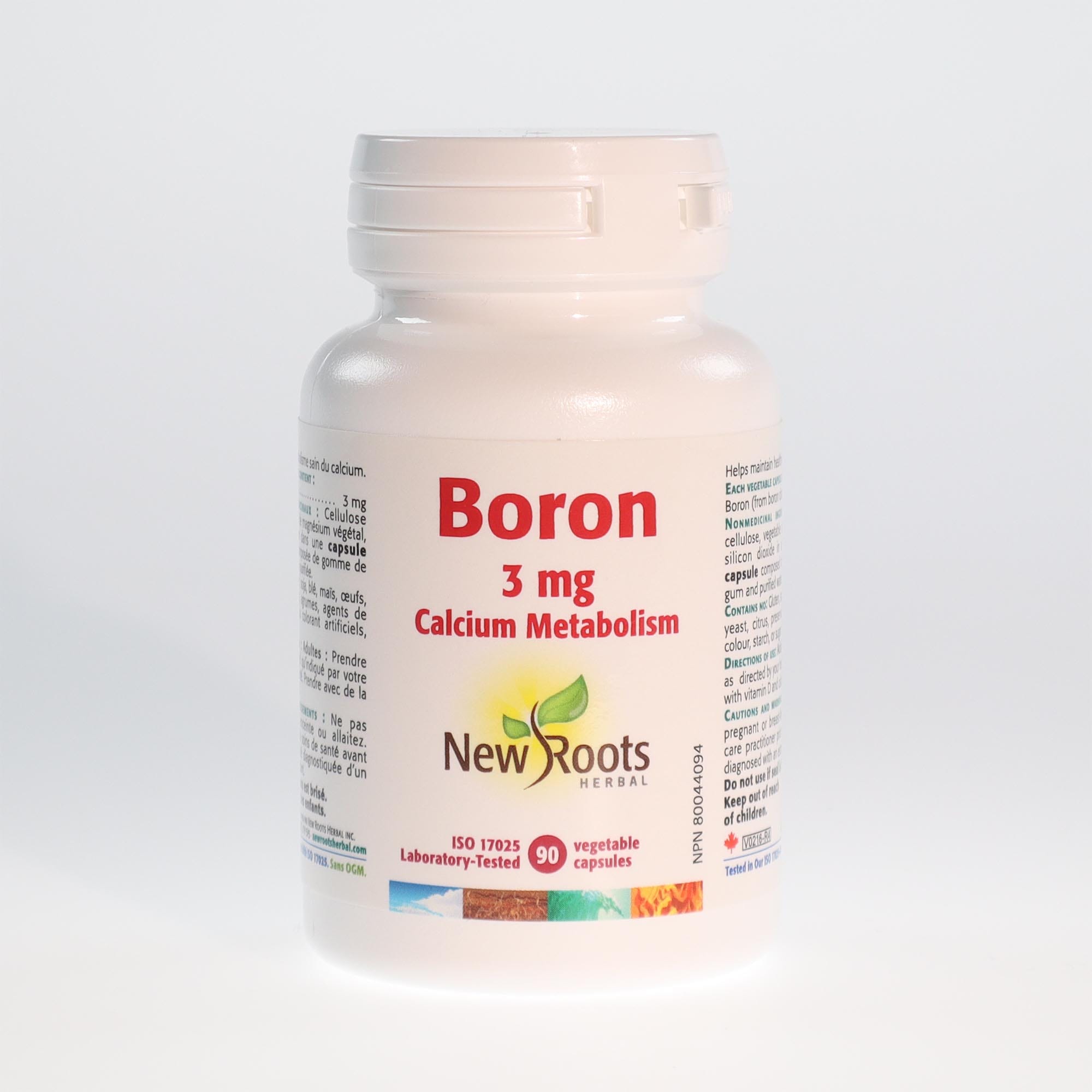
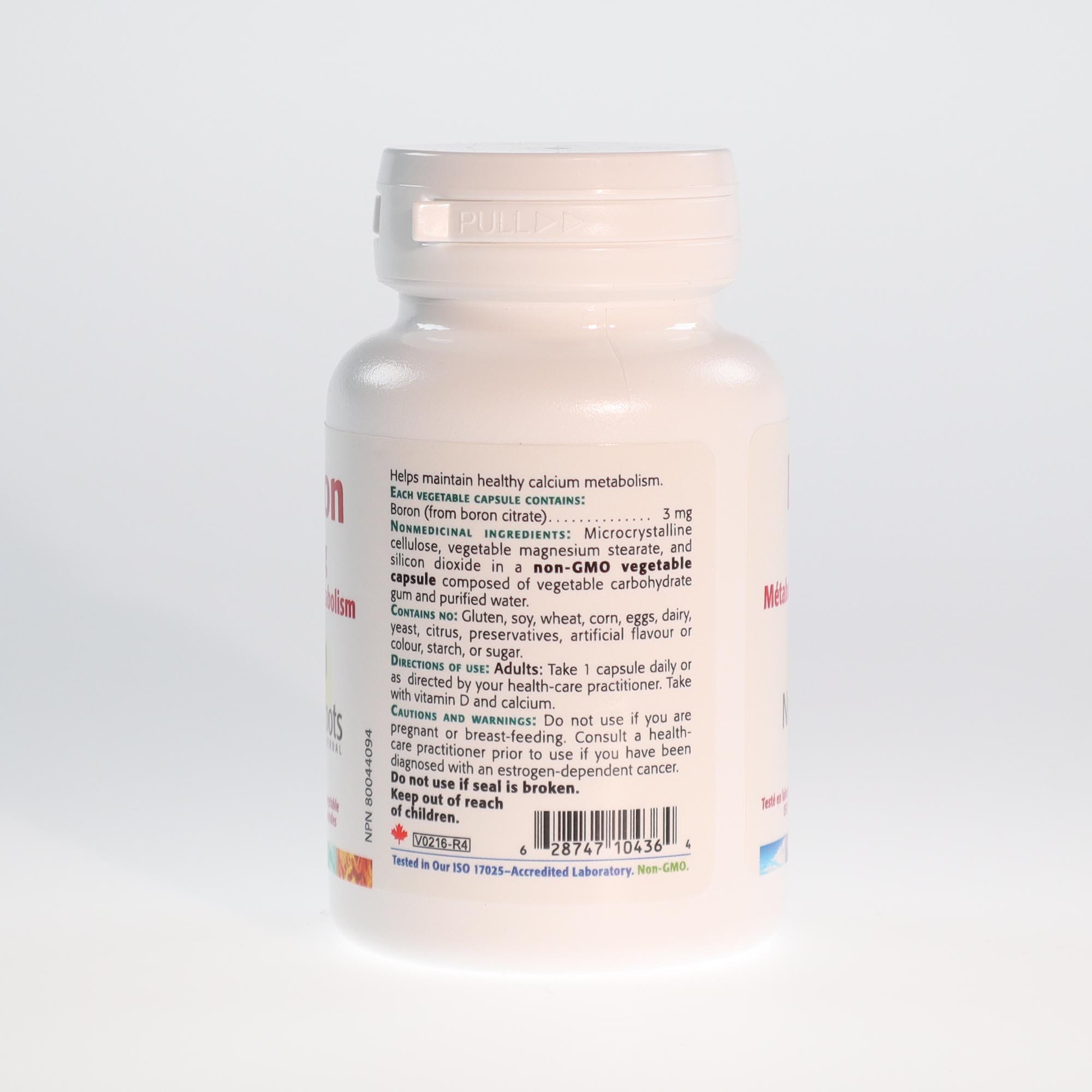
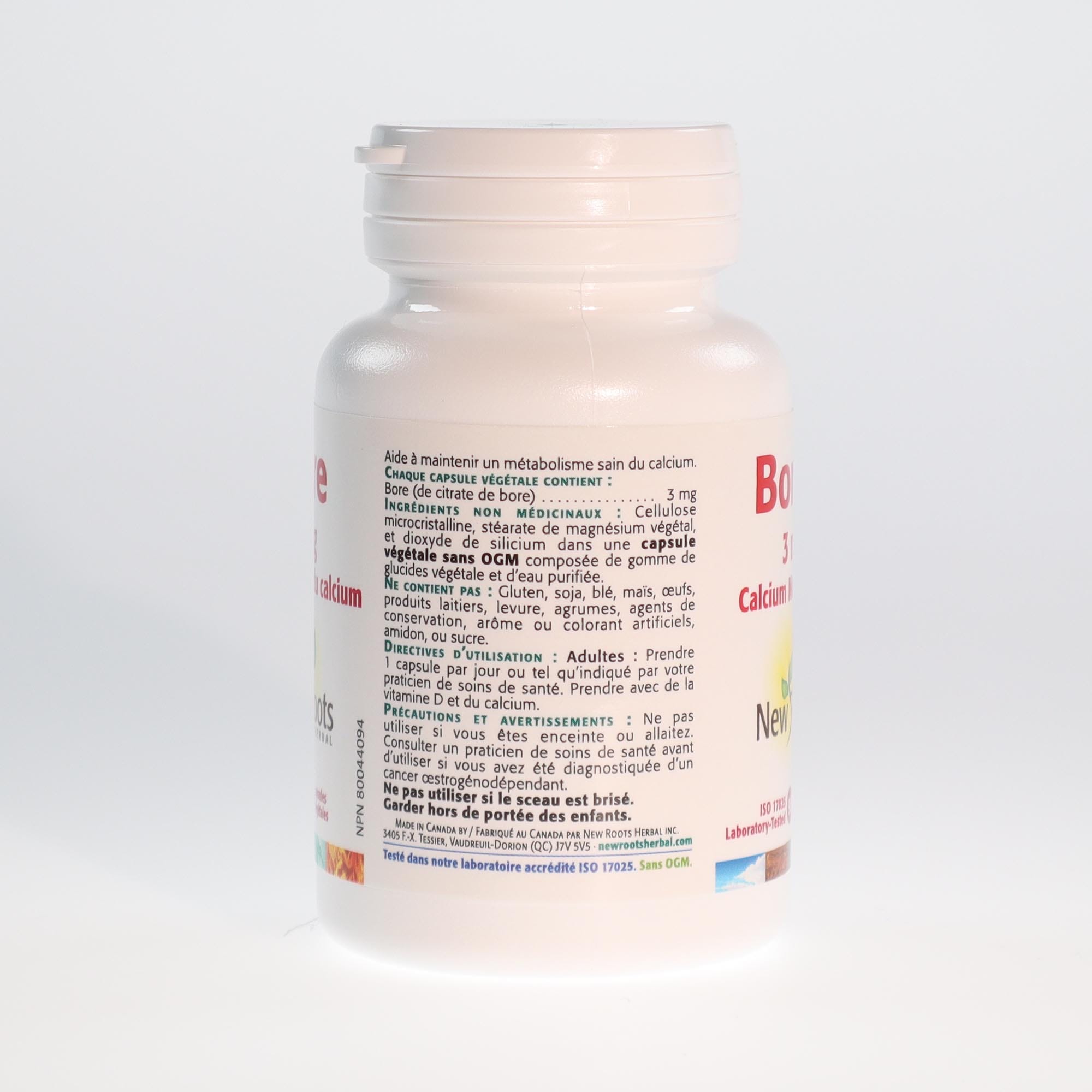
Each Veggie capsule Contains
Boron (from boron citrate)…3mg
Non-Medicinal Ingredients:
Vegetable magnesium stearate, silicon dioxide, and microcrystalline cellulose in a non‑GMO vegetable capsule composed of vegetable carbohydrate gum and purified water.
Dosage: Adults: take 1 capsule daily or as directed by your health-care practitioner. Best if taken at the same time as calcium and/or vitamin D supplements.
Important Information
Contains no: Preservative, artificial flavour or colour, sugar, starch, milk, wheat, corn, or soy. Keep out of reach of minors.