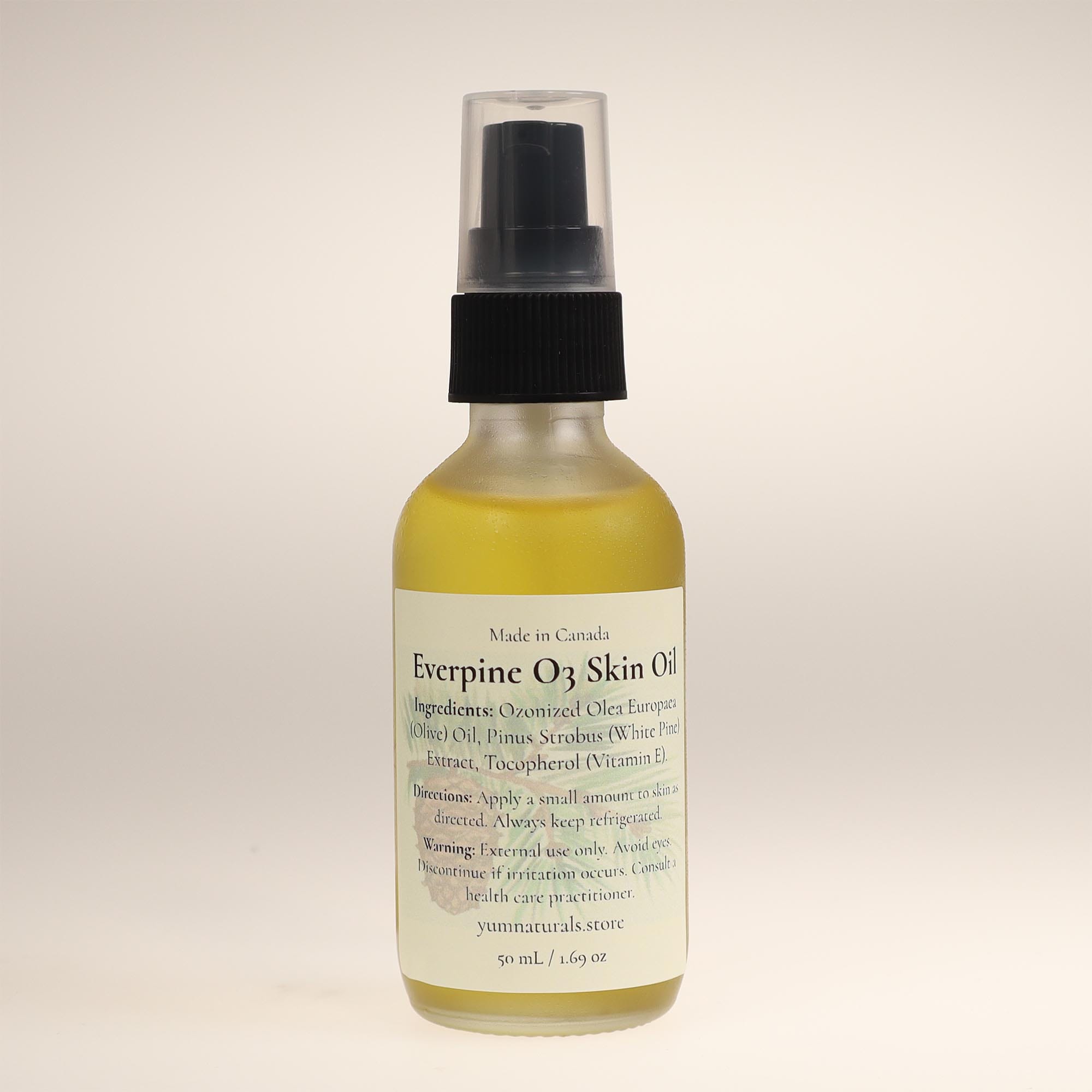
Ozonated Olive Oil with White Pine + Vitamin E
Everpine O3 Skin Oil is a limited-edition, small-batch botanical skin-conditioning oil made with Canadian Eastern White Pine (Pinus strobus) extracted into olive oil, then ozonated, with tocopherol (vitamin E) added for stability. The white pine used for this batch is sourced from a remote Canadian area away from large cities.
The rich oil is intended for topical conditioning of dry, rough or weathered-feeling skin.
Ingredients
Ozonized Olea Europaea (Olive) Oil, Pinus Strobus (White Pine) Extract, Tocopherol (Vitamin E).
Ozonated Olive Oil: Research Background
Ever heard of ozonated oil? It’s produced by exposing oil to ozone, which reacts with the oil and forms oxygen-rich compounds known as ozonides and peroxides. These compounds give ozonated oils their distinctive chemical properties and have been studied for a variety of topical applications. The research below concerns ozonated oils or individual ingredients and preparations generally; these studies did not test Everpine O3 Skin Oil itself and are included as ingredient-level research context rather than as claims that this cosmetic product diagnoses, treats, cures or prevents disease.
Ugazio et al. (2020) reviewed ozonated vegetable oils as antimicrobial systems in topical applications, including their chemistry, formulation and delivery. The review also notes formulation considerations such as odour, viscosity and possible skin irritation.
Radzimierska-Kaźmierczak et al. (2021) examined refined and ozonated olive oil experimentally and in cosmetic emulsions. The ozonated material improved several formulation-stability characteristics and showed weak to slightly enhanced in-vitro inhibitory activity against selected bacteria and fungi. The work was laboratory and cosmetic-formulation research rather than a clinical study of Everpine.
Leon et al. (2022) conducted a systematic review of nine studies evaluating ozonated liquids on human skin. The included studies did not identify significant short-term dermatologic risk signals, although the authors emphasized that the number of studies, variation in formulations and limited follow-up prevent firm conclusions about longer-term safety.
One clinical study has also examined a different topical ozonated oil preparation in a medical setting. Anzolin et al. (2021) conducted a randomized, triple-blinded, placebo-controlled trial involving 80 adults with osteoarthritis and reported pain improvement with the studied ozonated oil, including among participants with severe osteoarthritis. That trial did not evaluate Everpine O3 Skin Oil and does not establish osteoarthritis or pain treatment as an intended use of this product.
Olive Oil and Skin-Conditioning Research
Olive oil has a long history of cosmetic use as an emollient. A peer-reviewed chapter by Carata, Tenuzzo & Dini (2018) discusses the lipid composition and film-forming, emollient properties of vegetable oils as well as the chemistry and research surrounding ozonated extra-virgin olive oil.
A 2022 review by Melguizo-Rodríguez et al. examines olive oil and other olive-tree derivatives in relation to skin, including their use in topical hygiene and cosmetic products and research involving moisturizing, antioxidant and other biological properties of olive-derived constituents. This reference concerns olive-derived materials broadly and is not specific to Everpine or to ozonated olive oil.
White Pine (Pinus strobus) Research & Traditional Context
Research on Eastern White Pine depends strongly on the plant part and extraction method being studied. Legault et al. (2013) examined bark extracts from several boreal conifers, including Pinus strobus, and found measurable phenolic content and antioxidant activity in laboratory assays. Because that work used bark extracts prepared under specific experimental conditions, it should be viewed as botanical research rather than evidence for the finished Everpine formula.
Park et al. (2025) included hydrodistilled Pinus strobus essential oil among five essential oils screened for chemical composition and antibacterial activity in laboratory testing. Everpine contains Pinus Strobus Extract, not a standardized Pinus strobus essential oil, so this study is retained as species-level research context rather than a direct test of the ingredient preparation used here.
For traditional herbal context, the Ontario Herbalists Association monograph by Monika Ghent, RH (2022) describes Eastern White Pine preparations including infused oils and salves and documents a history of topical use. This is a traditional herbal reference, not a clinical trial of Everpine.
IMPORTANT: Except while applying, keep Everpine O3 Skin Oil refrigerated to help slow the loss of ozone. The product is packaged in a pump bottle to minimize unnecessary exposure to air; keep the bottle closed between uses.
Related Botanical Skin Care
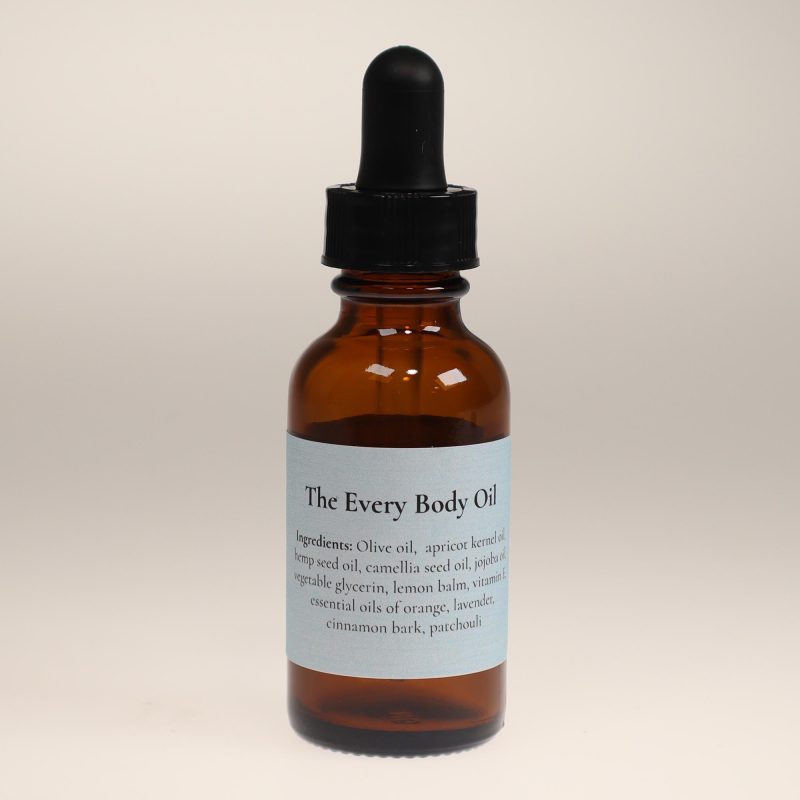
Explore the Herbal Oils collection for additional botanical oils. Related options include The Every Body Oil, Facial Cleansing Oil, Sun Kissed Body Cream, Arnica Botanical Salve and Calendula Botanical Salve.